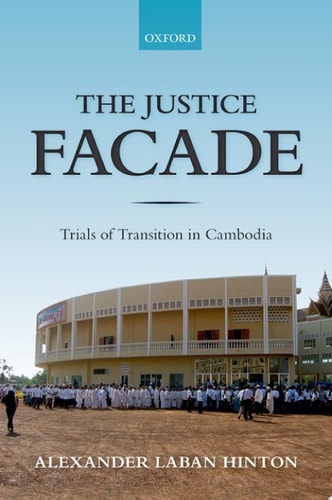
The Justice Facade
0
0
As an Amazon Associate and affiliate partner, Menrva Books earns from qualifying purchases. Learn more
Author Description
What Is Justice? Is It Always Just 'to Come'? Can Real Experience Be Translated Into Law? Examining Cambodia's Troubled Reconciliation, Alexander Hinton Suggests An Approach To Justice Founded On Global Ideals Of The Rule Of Law, Democratization, And A Progressive Trajectory Towards Liberty And Freedom, And Which Seeks To Align The Country With So Called Universal Modes Of Thought, Is Condemned To Failure. Instead, Hinton Advocates Focusing On The Individual Lived Experience, And The Discourses, Interstices, And The Combustive Encounters Connected With It, As A Radical Alternative. A Phenomenology Inspired Approach Towards Healing National Trauma, Hinton's Ground-breaking Text Will Make Anybody With An Interest In Transitional Justice, Development, Humanitarian Intervention, Human Rights, Or Peacebuilding, Question The Value Of An Established Truth.
Menrva's Summary
THE THESIS
The book investigates whether Western-centric models of justice and law are sufficient for addressing national trauma in post-conflict societies like Cambodia. Alexander Laban Hinton, an anthropologist specializing in genocide and human rights, challenges the efficacy of top-down international legal frameworks. He argues that these universalist approaches often fail to account for local lived experiences and the complex, often volatile, social dynamics that define the aftermath of mass violence.
THE SCOPE MAP
What You Will Find
- Analysis of the Extraordinary Chambers in the Courts of Cambodia (ECCC).
- A phenomenological framework for understanding justice as a lived, subjective experience.
- Critical evaluation of international humanitarian intervention and democratization efforts.
Scope Limits
- The text does not provide a comprehensive legal history of the Khmer Rouge trials.
- It does not offer a prescriptive policy manual for future international legal interventions.
THE AUTHORITY PERSPECTIVE
Scholars in the fields of transitional justice and anthropology frequently cite this work for its critical interrogation of international legal norms. Readers often note the academic density of the prose, which requires a foundational understanding of anthropological theory to fully grasp the author's arguments.
Page Count:
320
Publication Date:
2018-01-01
Publisher:
Oxford University Press
ISBN-10:
0192552902
ISBN-13:
9780192552907
Sociology
Cambodian History
Anthropology
Human rights
Transitional Justice
Community Tags
Similar Books