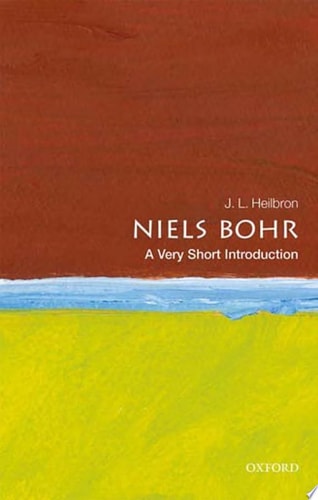
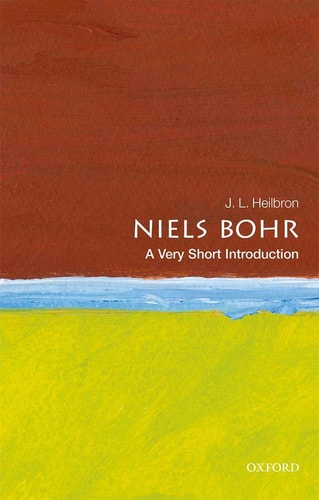
Niels Bohr: A Very Short Introduction
0
0
As an Amazon Associate and affiliate partner, Menrva Books earns from qualifying purchases. Learn more
Author Description
Niels Bohr, Who Pioneered The Quantum Theory Of The Atom, Had A Broad Conception Of His Obligations As A Physicist. They Included Not Only A Responsibility For The Consequences Of His Work For The Wider Society, But Also A Compulsion To Apply The Philosophy He Deduced From His Physics To Improving Ordinary People's Understanding Of The Moral Universe They Inhabit. In Some Of These Concerns Bohr Resembled Einstein, Although Einstein Could Not Accept What He Called The Tranquilizing Philosophy With Which Bohr Tried To Resolve Such Ancient Conundrums As The Nature (or Possibility) Of Free Will. In This Very Short Introduction John Heilbron Draws On Sources Never Before Presented In English To Cover The Life And Work Of One Of The Most Creative Physicists Of The 20th Century. In Addition To His Role As A Scientist, Heilbron Considers Bohr As A Statesman And Danish Cultural Icon, Who Built Scientific Institutions And Pushed For The Extension Of International Cooperation In Science To All Nation States. As A Humanist He Was Concerned With The Cultivation Of All Sides Of The Individual, And With The Complementary Contributions Of All Peoples To The Sum Of Human Culture. Throughout, Heilbron Considers How All Of These Aspects Of Bohr's Personality Influenced His Work, As Well As The Science That Made Him, In The Words Of Sir Henry Dale, President Of The Royal Society Of London, Probably The First Among All The Men Of All Countries Who Are Now Active In Any Department Of Science. About The Series: The Very Short Introductions Series From Oxford University Press Contains Hundreds Of Titles In Almost Every Subject Area. These Pocket-sized Books Are The Perfect Way To Get Ahead In A New Subject Quickly. Our Expert Authors Combine Facts, Analysis, Perspective, New Ideas, And Enthusiasm To Make Interesting And Challenging Topics Highly Readable.
Menrva's Summary
THE THESIS
This book investigates how Niels Bohr’s foundational contributions to quantum theory were inextricably linked to his broader philosophical, political, and humanitarian commitments. Author J. L. Heilbron, a distinguished historian of science, utilizes previously untranslated primary sources to construct a comprehensive portrait of Bohr. He argues that Bohr’s scientific methodology was a reflection of his belief in complementarity, a concept he applied to both the physical world and the moral challenges of the twentieth century.
THE SCOPE MAP
What You Will Find
- Biographical overview of Niels Bohr’s life and scientific career.
- Analysis of the development of quantum theory and the atomic model.
- Examination of Bohr’s role as a statesman and institutional builder in Denmark.
- Discussion of Bohr’s philosophical debates with Albert Einstein regarding free will and determinism.
Scope Limits
- The text does not provide an exhaustive technical manual for advanced quantum mechanics.
- It does not offer a detailed history of the entire Manhattan Project, focusing instead on Bohr’s specific humanitarian and political interventions.
THE AUTHORITY PERSPECTIVE
Experts recognize this work as a concise yet rigorous entry point into the life of a pivotal scientific figure. Readers frequently note that the prose balances academic depth with accessibility, making it a standard resource for those seeking to understand the intersection of science and humanism.
Page Count:
160
Publication Date:
2020-01-01
Publisher:
Oxford University Press
ISBN-10:
0192551337
ISBN-13:
9780192551337
Biography
Non-Fiction
Physics
Philosophy of
Science History
Community Tags
Other Editions(2)
Similar Books






Reader Comments
Share Your Thoughts
No comments yet. Be the first to share your thoughts!