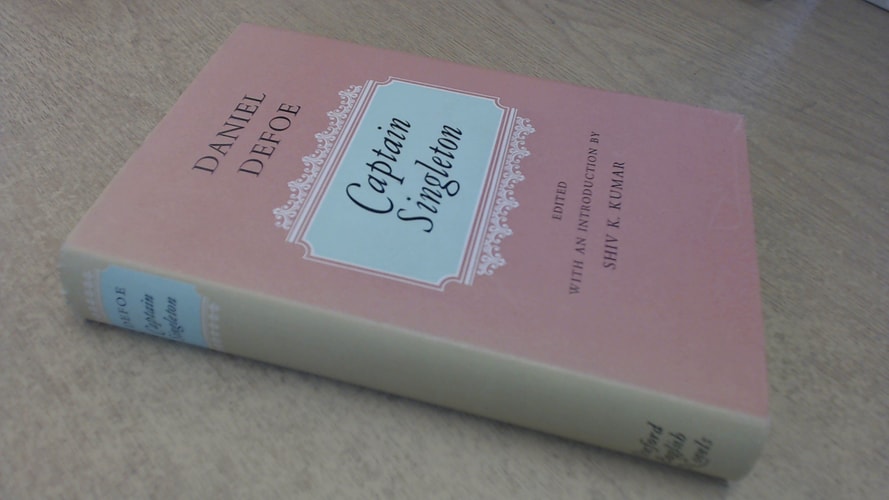
The Life, Adventures, and Piracies of Captain Singleton
0
0
As an Amazon Associate and affiliate partner, Menrva Books earns from qualifying purchases. Learn more
Author Description
Daniel Defoe (1659-1661 to 1731) was an English writer, journalist, and pamphleteer, who gained fame for his novel Robinson Crusoe. The Life, Adventures, and Piracies of Captain Singleton is one of his earliest novels. The narrative describes the life of an Englishman, stolen from a well-to-do family as a child and raised by Gypsies, who eventually makes his way to sea.
Menrva's Summary
THE PULSE
A kidnapped child navigates a life of crime and maritime exploration, eventually rising to the rank of a notorious pirate captain. After being stolen from his family and raised by Gypsies, the protagonist enters a world of instability and constant movement. He joins a crew, survives a mutiny, and traverses the African continent before turning to piracy on the high seas. The narrative is presented as a retrospective account, detailing the protagonist's moral ambiguity and his pragmatic approach to survival in a harsh, unforgiving world. The story follows a linear progression, documenting his transition from a victim of circumstance to an active participant in global plunder.
INSIDE THE PAGES
- First-person confessional narrative style
- Detailed descriptions of 18th-century maritime navigation
- Exploration of the African interior as a setting for adventure
- Examination of the picaresque anti-hero archetype
- Focus on the economic motivations behind piracy
- Episodic structure typical of early novelistic forms
- Realistic depiction of colonial-era trade routes
- Moral ambiguity regarding the protagonist's criminal activities
THE COLLECTIVE ECHO
Discussion often centers on the novel's role as a precursor to the modern adventure genre and its influence on later maritime literature. Readers frequently highlight the stark, matter-of-fact prose that characterizes Defoe's style, noting that it prioritizes action and logistical detail over internal psychological reflection. Critics often point to the book's episodic nature as a reflection of the picaresque tradition, where the protagonist's survival is the primary driver of the plot. The work is frequently analyzed for its depiction of colonial expansion and the economic realities of the eighteenth-century pirate lifestyle. Many readers find the transition from the African overland expedition to the sea-based piracy segments to be a distinct shift in the narrative's pacing and thematic focus.
Page Count:
284
Publication Date:
1969-01-01
Publisher:
Oxford University Press
ISBN-10:
0192553283
ISBN-13:
9780192553287
Adventure
Maritime
classic
Action Adventure
Picaresque
Historical
Community Tags
Similar Books