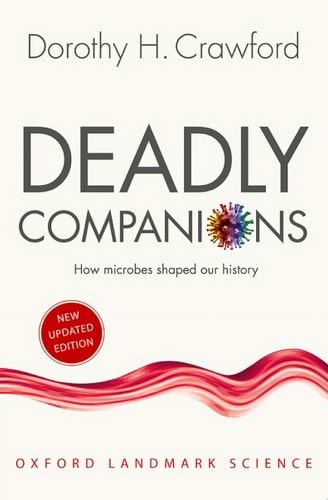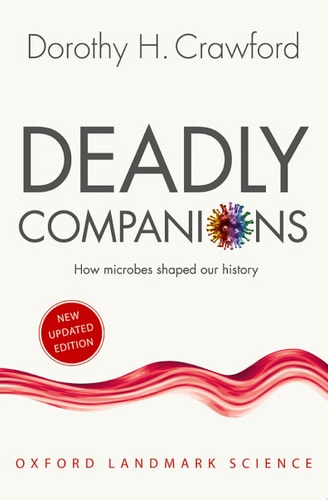
Deadly Companions
0
0
As an Amazon Associate and affiliate partner, Menrva Books earns from qualifying purchases. Learn more
Author Description
Ever Since We Started Huddling Together In Communities, The Story Of Human History Has Been Inextricably Entwined With The Story Of Microbes. They Have Evolved And Spread Amongst Us, Shaping Our Culture Through Infection, Disease, And Pandemic. At The Same Time, Our Changing Human Culture Has Itself Influenced The Evolutionary Path Of Microbes. Dorothy H. Crawford Here Shows That One Cannot Be Truly Understood Without The Other. Beginning With A Dramatic Account Of The Sars Pandemic At The Start Of The 21st Century, She Takes Us Back In Time To Follow The Interlinked History Of Microbes And Man, Taking An Up-to-date Look At Ancient Plagues And Epidemics, And Identifying Key Changes In The Way Humans Have Lived - Such As Our Move From Hunter-gatherer To Farmer To City-dweller — Which Made Us Vulnerable To Microbe Attack. Showing How We Live Our Lives Today — With Increasing Crowding And Air Travel — Puts Us Once Again At Risk, Crawford Asks Whether We Might Ever Conquer Microbes Completely, Or Whether We Need To Take A More Microbe-centric View Of The World. Among The Possible Answers, One Thing Becomes Clear: That For Generations To Come, Our Deadly Companions Will Continue To Shape Human History. Oxford Landmark Science Books Are 'must-read' Classics Of Modern Science Writing Which Have Crystallized Big Ideas, And Shaped The Way We Think.
Menrva's Summary
THE THESIS
This book investigates the reciprocal evolutionary relationship between human civilization and infectious microbes throughout history. Dorothy H. Crawford, a professor of medical microbiology, utilizes historical records and epidemiological data to argue that human cultural shifts—such as the transition to agriculture and urbanization—have fundamentally altered the trajectory of microbial evolution. The text posits that human history cannot be analyzed in isolation from the pathogens that have consistently shaped societal development and population health.
THE SCOPE MAP
What You Will Find
- Analysis of the transition from hunter-gatherer societies to urban centers and its impact on disease transmission.
- Historical accounts of ancient plagues and modern pandemics, including SARS.
- Examination of how contemporary behaviors like global air travel increase vulnerability to emerging pathogens.
Scope Limits
- The text does not provide a comprehensive clinical manual for the treatment of specific infectious diseases.
- The analysis focuses primarily on the macro-evolutionary and historical interaction rather than detailed molecular biology.
THE AUTHORITY PERSPECTIVE
Experts and readers recognize this work as a clear, accessible synthesis of the co-evolutionary history between humans and pathogens. The prose is noted for its ability to translate complex epidemiological concepts into a narrative that remains grounded in scientific evidence.
Page Count:
287
Publication Date:
2018-01-01
Publisher:
Oxford University Press
ISBN-10:
019255297X
ISBN-13:
9780192552976
History
Science
Microbiology
Evolutionary Biology
Epidemiology
Public Health
Community Tags
Other Editions(2)
Similar Books