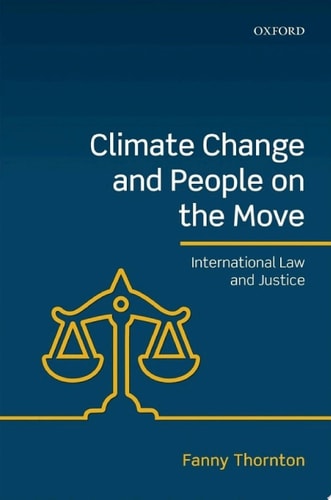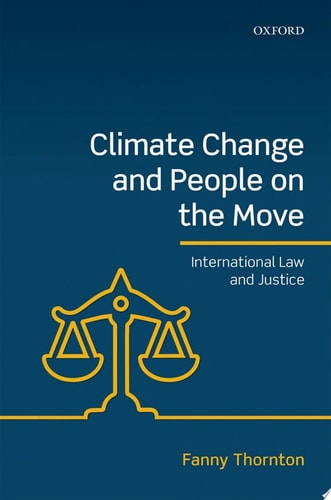
Climate Change and People on the Move
0
0
As an Amazon Associate and affiliate partner, Menrva Books earns from qualifying purchases. Learn more
Author Description
This Book Applies A Justice Framework To Analysis Of The Actual And Potential Role Of International Law With Respect To People On The Move In The Context Of Anthropogenic Climate Change. That People Are Affected By The Impacts Of Climate Change Is No Longer Doubted, Including With Implications For People Movement (migration, Displacement, Relocation, Etc.). Climate Change And People On The Move Tackles Unique Questions Concerning International Responsibility For People Movement Arising From The Inequities Inherent To Climate Change. Corrective And Distributive Justice Provide The Analytical Backbone, And Are Explored In A Substantial Theoretical Chapter And Then Applied To Subsequent Contextual Analysis. Corrective Justice Supports Analysis As To Whether People Movement In The Climate Change Context Could Be Conceived Or Framed As Harm, Loss, Or Damage Which Is Compensable Under International Law, Either Through Fault-centred Regimes Or No-fault Regimes (i.e. Insurance). Distributive Justice Supports Analysis As To Whether Such Movement Could Be Conceived Or Framed As A Disproportionate Burden, Either For Those Faced With Movement Or Those Faced With Sheltering People On The Move, From Which Duties Of Re-distribution May Stem. This Book Contributes To The Growing Scholarship And Analysis Concerning International Law Or Governance And People Movement In Response To The Impacts Of Climate Change By Investigating The Bounds Of The Law Where The Phenomenon Is Viewed As One Of (in)justice.
Menrva's Summary
THE THESIS
This book investigates whether international law can effectively address the displacement and migration of populations caused by anthropogenic climate change through the lenses of corrective and distributive justice. Fanny Thornton, a legal scholar, utilizes these philosophical frameworks to evaluate the current limitations and potential applications of international legal regimes. The text argues that by framing climate-induced movement as either a compensable harm or a disproportionate burden, the international community may better define its responsibilities toward displaced persons.
THE SCOPE MAP
What You Will Find
- Analysis of international law regarding migration, displacement, and relocation in climate contexts
- Theoretical application of corrective and distributive justice frameworks
- Evaluation of fault-centered and no-fault legal regimes, including insurance models
Scope Limits
- Does not provide a comprehensive policy manual for national immigration authorities
- Does not focus on domestic climate migration policies within single sovereign states
THE AUTHORITY PERSPECTIVE
Experts recognize this work as a significant contribution to the intersection of environmental law and human rights. Readers frequently note the academic density of the prose, which is intended for legal scholars and policy researchers interested in the theoretical foundations of climate justice.
Page Count:
240
Publication Date:
2018-01-01
Publisher:
Oxford University Press
ISBN-10:
0192558242
ISBN-13:
9780192558244
Climate Change
Human rights
International Law
Migration Studies
Community Tags
Similar Books