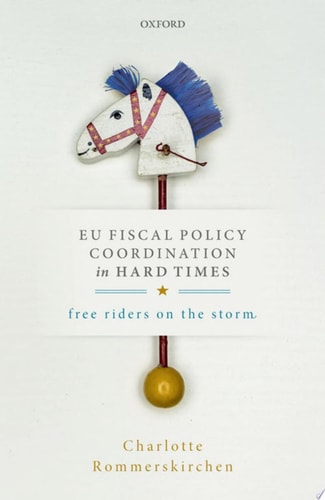
EU Fiscal Policy Coordination in Hard Times: Free Riders on the Storm
0
0
As an Amazon Associate and affiliate partner, Menrva Books earns from qualifying purchases. Learn more
Author Description
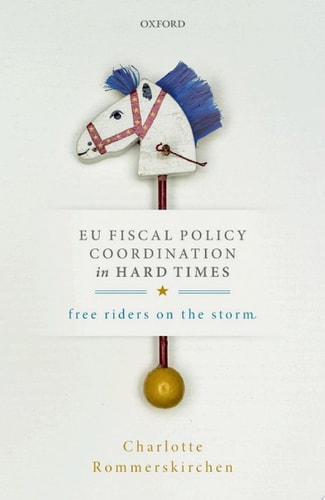
What happens to European Union (EU) fiscal policy coordination in hard times? Recent accounts of the EU have portrayed the union as plagued by an austerity regime and rampant moral hazard. Charlotte Rommerskirchen provides an alternative account of economic cooperation in Europe during the Great Recession and the European Debt Crisis. Drawing on Mancur Olson's theory of collective action, this volume combines evidence from statistical analysis and extensive interviews with key players. This book reaches an unexpected conclusion regarding the state of collective action in times of crises: Free riding was not rife. Despite heated accusations, member states crisis policies matched their fiscal room for manoeuvre. The real collective action failure is instead diagnosed in the inability to sanction free riders at the EU level and empowering erratic bond markets to discipline governments.
Menrva's Summary
THE THESIS
This volume investigates the mechanisms of European Union fiscal policy coordination during periods of severe economic instability, specifically questioning whether member states engaged in widespread free riding during the Great Recession and the European Debt Crisis. Charlotte Rommerskirchen, a scholar of international political economy, challenges the prevailing narrative of an austerity-driven regime plagued by moral hazard. By applying Mancur Olson’s theory of collective action to the European context, the author argues that member states generally aligned their fiscal policies with their actual economic capacity rather than shirking their responsibilities. The work posits that the primary failure of the European project lies not in state-level free riding, but in the institutional inability to effectively sanction non-compliance and the subsequent reliance on volatile bond markets to enforce fiscal discipline.
THE SCOPE MAP
What You Will Find
- Analysis of EU fiscal policy coordination during the Great Recession and the European Debt Crisis.
- Application of Mancur Olson’s collective action theory to contemporary European economic governance.
- Integration of quantitative statistical data with qualitative insights from interviews with key political actors.
Scope Limits
- The analysis focuses primarily on the period of the Great Recession and the subsequent debt crisis rather than post-pandemic fiscal developments.
- The text does not provide a comprehensive history of the Eurozone’s creation or its long-term monetary policy evolution.
THE AUTHORITY PERSPECTIVE
Scholars and political economists frequently cite this work for its rigorous application of collective action theory to the complexities of EU governance. Readers often note the academic density of the prose, which serves as a foundational text for those studying the intersection of institutional design and fiscal crisis management.
Page Count:
227
Publication Date:
2019-01-01
Publisher:
OUP Oxford
ISBN-10:
0192564226
ISBN-13:
9780192564221
Economics
Monetary unions
European Union
International relations
Public Policy
Fiscal Policy
Community Tags
Similar Books