Future Air Force Needs for Survivability
0
0
As an Amazon Associate and affiliate partner, Menrva Books earns from qualifying purchases. Learn more
Author Description
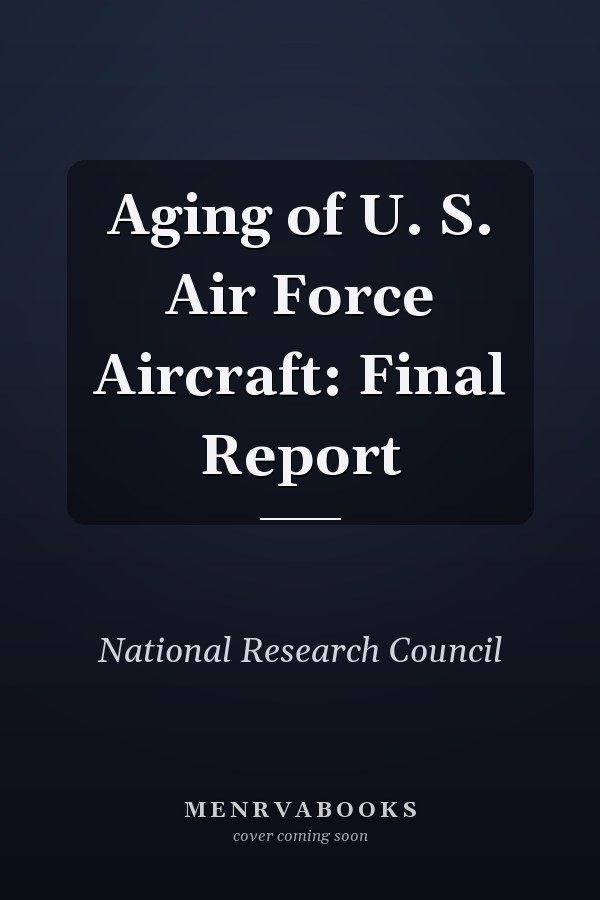
A key technical issue for future Air Force systems is to improve their ability to survive. Increased use of stealth technology is proposed by many to be the major element in efforts to enhance survivability for future systems. Others, however, suggest that the high cost and maintenance required of stealth technology make increased speed potentially more productive. To help address this issue, the Air Force asked the NRC to investigate combinations of speed and stealth that would provide U.S. aircraft with a high survival capability in the 2018 period, and to identify changes in R&D plans to enable such aircraft. This report presents a review of stealth technology development; a discussion of possible future missions and threats; an analysis of the technical feasibility for achieving various levels of stealth and different speeds by 2018 and of relevant near-term R&D needs and priorities; and observations about the utility of speed and stealth trade-offs against evolving threats.
Menrva's Summary
THE THESIS
The core technical challenge for future Air Force systems is to significantly enhance their survivability in increasingly complex threat environments. The report investigates the trade-offs between stealth technology and increased speed as primary means to achieve this goal, addressing the Air Force's request to identify optimal combinations for the 2018 timeframe and necessary R&D shifts. It examines the current state of stealth development, projects future missions and threats, and analyzes the technical feasibility of various stealth and speed levels by 2018, alongside relevant R&D priorities. The analysis also considers the evolving nature of threats and the strategic utility of balancing speed and stealth.
THE SCOPE MAP
- Review of current stealth technology development and its limitations.
- Analysis of potential future Air Force missions and evolving threat landscapes.
- Technical feasibility assessment of achieving specific stealth and speed capabilities by 2018.
- Identification of near-term Research and Development needs and priorities.
- Examination of the strategic trade-offs between speed and stealth against projected threats.
- Consideration of cost and maintenance implications of advanced technologies.
THE AUTHORITY PERSPECTIVE
This report, commissioned by the Air Force and produced by the National Research Council, addresses a critical strategic and technical issue for future military aviation. The analysis focuses on the practical application of technological advancements like stealth and speed, grounded in technical feasibility and R&D planning. It is structured to inform defense policy and research investment by providing a data-driven perspective on survivability enhancements. The work aims to guide the Air Force in developing aircraft capable of high survival rates against anticipated threats.
Page Count:
116
Publication Date:
2006-11-03
Publisher:
National Academies Press
ISBN-10:
0309102197
ISBN-13:
9780309102193
Science & Technology
Non-Fiction
Defense Policy
Aerospace Engineering
Military Technology
Community Tags
Similar Books