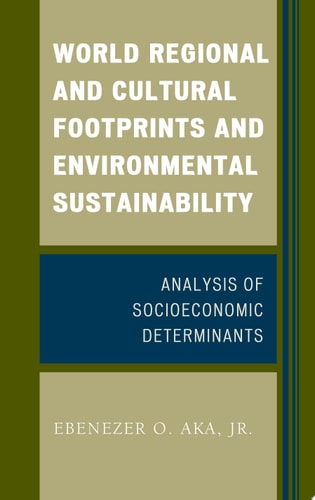
World Regional and Cultural Footprints and Environmental Sustainability
0
0
As an Amazon Associate and affiliate partner, Menrva Books earns from qualifying purchases. Learn more
Author Description
The book examines the issues of sustainability in general. It addresses various socioeconomic determinants of ecological footprints in different world’s nations, regions, and cultures. Major socioeconomic determinants of ecological footprints are fleshed out using Comparative Model Analysis and rigorous Multiple Regression Analysis. The study exposes the inequitable distribution of the world’s ecological footprints and also heightens the concern about ecological imbalances and overshoots. It explains how sustainable development can be promoted and achieved in regional, national, and local jurisdictions. The study provides information that will likely help various governments and policy-makers determine if a given nation, region, or culture is on a sustainable path. It helps government leaders, planners, policy-makers, and even students of sustainability make a difference in mitigating the effects of various environmental stressors. If this book makes people and policy-makers in different countries, regions, and cultures think globally but act locally, then the objectives are well-served.
Menrva's Summary
THE THESIS
This book investigates the multifaceted issues surrounding environmental sustainability and the socioeconomic determinants of ecological footprints across diverse global contexts. It delves into how various nations, regions, and cultures contribute to and are affected by their ecological footprints, employing rigorous quantitative methods such as Comparative Model Analysis and Multiple Regression Analysis to identify key drivers. The study critically examines the unequal distribution of these footprints and highlights growing concerns about ecological imbalances and overshoots, offering insights into pathways for promoting sustainable development at multiple jurisdictional levels.
THE SCOPE MAP
- An examination of general sustainability issues.
- Analysis of socioeconomic determinants of ecological footprints in various world nations, regions, and cultures.
- Application of Comparative Model Analysis and Multiple Regression Analysis to identify major socioeconomic determinants.
- Exposure of the inequitable distribution of the world’s ecological footprints and ecological imbalances.
- Explanations on how sustainable development can be promoted and achieved at regional, national, and local levels.
- Information to help governments and policy-makers assess sustainability paths.
- Guidance for leaders, planners, policy-makers, and students in mitigating environmental stressors.
THE AUTHORITY PERSPECTIVE
The book offers a data-driven approach to understanding environmental sustainability, likely appealing to academics, policymakers, and students in environmental studies and related fields. Its methodological rigor, employing comparative model analysis and multiple regression, suggests a text geared towards those who appreciate quantitative research in environmental policy. The focus on regional and cultural variations in ecological footprints provides a nuanced perspective on a global issue, aiming to inform practical strategies for sustainable development.
Page Count:
368
Publication Date:
2017-04-26
Publisher:
Bloomsbury USA
ISBN-10:
0761868658
ISBN-13:
9780761868651
Science
Non-Fiction
Policy Making
Community Tags
Similar Books