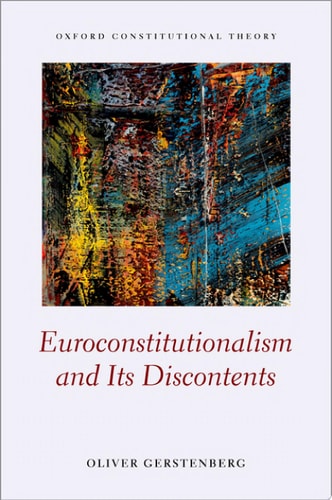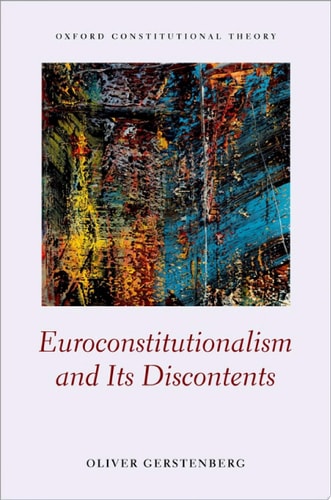
Euroconstitutionalism and its Discontents
0
0
As an Amazon Associate and affiliate partner, Menrva Books earns from qualifying purchases. Learn more
Author Description
This book addresses the question of social constitutionalism, especially with regard to its role in the contemporary European project. For reasons of history and democracy, Europeans share a deep commitment to social constitutionalism. But in the contemporary European constitutional debate, constitutionalism and social democracy have become antagonists, with the survival of the one seeming to require sacrifice of the other. This book challenges the common view that constitutionalization means de-politicization. It argues that courts can exert a more indirect, creative, and agenda-setting role in the process of an ongoing clarification of the meaning of a right. The CJEU and the ECtHR - as courts beyond the nation state - are able to constructively re-open and re-politicize controversies that may appear settled at the national level in their constitutionalizing jurisprudence. And, crucially, our understanding of shared European constitutional principles is itself subject to revision and reconsideration as we accumulate experiences of dealing with diverse national contexts. By examining the jurisprudence of the CJEU and the ECtHR, the book demonstrates that in domain after domain, ranging from the protection of the vulnerable in the European social market to the guarantee of freedom of conscience, which in Europe emerged after many centuries of religious persecution, both courts can enhance and deepen democracy and thereby encourage the liberal project of constitutionalism beyond the state. Over time, once interpretive answers have become established in practice, courts can then move towards stronger forms of judicial intervention that consolidate best practice. It is this democratic and experimental process which lies at the heart of the distinctive model of contemporary Euroconstitutionalism.
Menrva's Summary
THE THESIS
This book investigates whether social constitutionalism and democratic governance can coexist within the contemporary European project. Oliver Gerstenberg, a scholar of legal and political theory, challenges the prevailing assumption that constitutionalization inherently leads to de-politicization. He argues that supranational courts, specifically the CJEU and the ECtHR, function as experimental sites that can re-politicize and clarify rights rather than merely enforcing static legal mandates.
THE SCOPE MAP
What You Will Find
- Analysis of the jurisprudence of the Court of Justice of the European Union (CJEU) and the European Court of Human Rights (ECtHR).
- A theoretical framework for understanding social constitutionalism as an experimental, iterative process.
- Examination of specific domains including social market protections and freedom of conscience.
Scope Limits
- The text does not provide a comprehensive history of all European treaties or institutional structures.
- It does not offer a detailed comparative analysis of every individual member state's national constitutional law.
THE AUTHORITY PERSPECTIVE
Legal scholars and political theorists frequently cite this work for its nuanced defense of judicial intervention in the European context. Experts note that the prose maintains a high level of academic density, making it a significant contribution to ongoing debates regarding the democratic legitimacy of supranational courts.
Page Count:
192
Publication Date:
2018-01-01
Publisher:
OUP Oxford
ISBN-10:
0192571168
ISBN-13:
9780192571168
Constitutional Law
Law
European Union
Professional Career & Trade
Political Theory