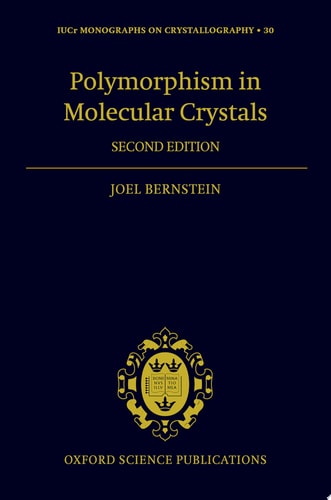
Polymorphism in Molecular Crystals
0
0
As an Amazon Associate and affiliate partner, Menrva Books earns from qualifying purchases. Learn more
Author Description
Most people are familiar with the fact that diamond and graphite are both composed only of carbon; yet they have very different properties which result from the very different structures of the two solids - they are polymorphs of carbon. Understanding the relationship between the structures and the properties of materials is of fundamental importance in developing and producing new materials with improved or new properties. The existence of polymorphic systems allows the direct study of the connection between structures and properties. This book provides grounding on the fundamental structural and energetic basis for polymorphism, the preparation and characterization of polymorphic substances and its importance in the specific areas of pharmaceuticals, pigments and high energy (explosive) materials. The closing chapter describes the intellectual property implications and some of the precedent patent litigations in which polymorphism has played a central role. The book contains over 2500 references to provide a ready entry into the relevant literature.
Menrva's Summary
THE THESIS
This book investigates the fundamental structural and energetic principles of polymorphism in molecular crystals and its practical implications across industrial sectors. Joel Bernstein, a recognized authority in the field, synthesizes decades of research to explain how different structural arrangements of the same chemical composition result in divergent physical properties. The text establishes a framework for understanding the preparation, characterization, and industrial significance of polymorphic substances, bridging the gap between theoretical crystallography and applied material development.
THE SCOPE MAP
What You Will Find
- Structural and energetic foundations of molecular polymorphism
- Methodologies for the preparation and characterization of polymorphic substances
- Analysis of polymorphism in pharmaceuticals, pigments, and high-energy materials
- Examination of intellectual property implications and patent litigation precedents
- An extensive bibliography containing over 2500 references
Scope Limits
- The text focuses primarily on molecular crystals rather than metallic or ionic systems
- It does not provide a comprehensive guide to computational modeling software
THE AUTHORITY PERSPECTIVE
Experts and researchers frequently cite this work as a foundational text for understanding the relationship between crystal structure and material performance. Readers often note the academic density of the prose, which serves as a comprehensive reference for professionals in chemistry and materials science.
Page Count:
608
Publication Date:
2020-01-01
Publisher:
OUP Oxford
ISBN-10:
0192571982
ISBN-13:
9780192571984
Science
Solid-State Physics
Chemistry
Earth Sciences
Community Tags
Other Editions(8)
Similar Books










Reader Comments
Share Your Thoughts
No comments yet. Be the first to share your thoughts!