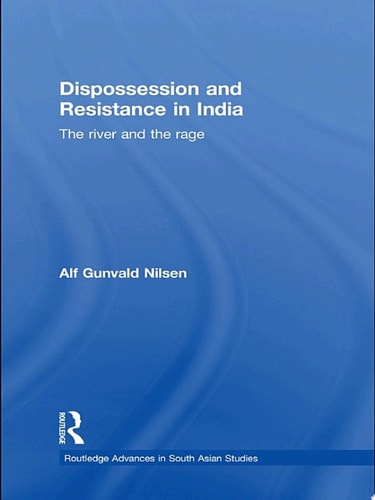
Dispossession and Resistance in India
0
0
As an Amazon Associate and affiliate partner, Menrva Books earns from qualifying purchases. Learn more
Author Description
This book deals with the controversies on developmental aspects of large dams, with a particular focus on the Narmada Valley projects in India. Based on extensive ethnographic fieldwork and research, the author draws on Marxist theory to craft a detailed analysis of how local demands for resettlement and rehabilitation were transformed into a radical anti-dam campaign linked to national and transnational movement networks. The book explains the Narmada conflict and addresses how the building of the anti-dam campaign was animated by processes of collective learning, how activists extended the spatial scope of their struggle by building networks of solidarity with transnational advocacy groups, and how it is embedded in and shaped by a wider field of force of capitalist development at national and transnational scales. The analysis emphasizes how the Narmada dam project is related to national and global processes of capitalist development, and relates the Narmada Valley movement to contemporary popular struggles against dispossession in India and beyond. Conclusions drawn from the resistance to the Narmada dams can be applied to social movements in other parts of the Global South, where people are struggling against dispossession in a context of neoliberal restructuring. As such, this book will have relevance for people with an interest in South Asian studies, Indian politics and Development Studies.
Menrva's Summary
THE THESIS
This book investigates the complex interplay between large-scale development projects and local resistance, focusing on the Narmada Valley projects in India. Drawing on extensive ethnographic fieldwork and Marxist theory, the author analyzes how demands for resettlement and rehabilitation evolved into a significant anti-dam campaign. This campaign was intricately linked with national and transnational movement networks, demonstrating collective learning processes and the extension of spatial scope through solidarity with advocacy groups, all within the broader context of capitalist development.
THE SCOPE MAP
- Analysis of the controversies surrounding large dam development, specifically the Narmada Valley projects.
- Application of Marxist theory to understand processes of dispossession and resistance.
- Detailed examination of local demands for resettlement and rehabilitation.
- Transformation of local demands into a radical anti-dam campaign.
- Exploration of collective learning processes within activist movements.
- Building of solidarity networks with transnational advocacy groups.
- Embedding of the conflict within national and transnational capitalist development.
- Relevance of conclusions to contemporary popular struggles against dispossession in the Global South.
THE AUTHORITY PERSPECTIVE
The book is positioned as a relevant study for those interested in South Asian studies, Indian politics, and Development Studies, particularly concerning social movements against dispossession in the context of neoliberal restructuring. Its analysis, grounded in Marxist theory and ethnographic research, aims to provide insights applicable to similar struggles across the Global South. The work is expected to be of interest to scholars and activists engaged with issues of capitalist development and popular resistance.
Page Count:
256
Publication Date:
2010-04-05
Publisher:
Taylor & Francis
ISBN-10:
1136994319
ISBN-13:
9781136994319
Politics
Science
History
Non-Fiction
Indian Politics
Ethnography
Marxist Theory
Community Tags
Similar Books