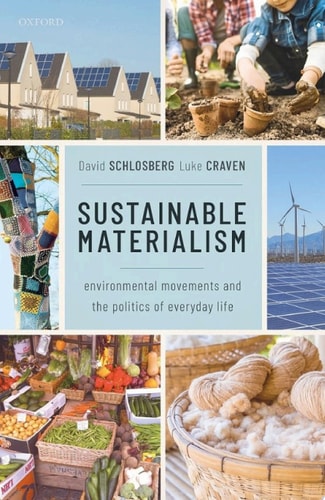
Sustainable Materialism: Environmental Movements and the Politics of Everyday Life
0
0
As an Amazon Associate and affiliate partner, Menrva Books earns from qualifying purchases. Learn more
Author Description
A growing number of environmental groups focus on more sustainable practices in everyday life, from the development of new food systems, to community solar, to more sustainable fashion. No longer willing to take part in unsustainable practices and institutions, and not satisfied with either purely individualistic and consumer responses or standard political processes and movement tactics, many activists and groups are increasingly focusing on restructuring everyday practices of the circulation of the basic needs of everyday life. This work labels such action sustainable materialism, and examines the political and social motivations of activists and movement groups involved in this growing and expanding practice. The central argument is that these movements are motivated by four key factors: frustration with the lack of accomplishments on broader environmental policies, a desire for environmental and social justice, an active and material resistance to the power of traditional industries, and a form of sustainability that is attentive to the flow of materials through bodies, communities, economies, and environments. In addition to these motivations, these movements demonstrate such material action as political action, in contrast to existing critiques of new materialism as apolitical or post-political. Overall, sustainable materialism is explored as a set of movements with unique qualities, based in collective rather than individual action, a dedication to local and prefigurative politics, and a demand that sustainability be practiced in everyday life - starting with the materials and flows that provide food, power, clothing, and other basic needs.
Menrva's Summary
THE THESIS
This book investigates how contemporary environmental movements shift their focus toward the restructuring of everyday material practices to address systemic ecological and social crises. Authors David Schlosberg and Luke Craven, both scholars in environmental politics, analyze the transition from traditional policy-based activism to grassroots efforts centered on the circulation of basic needs. They argue that these movements represent a deliberate form of political resistance that prioritizes material flows and collective action over individual consumer choices.
THE SCOPE MAP
What You Will Find
- Analysis of community-based initiatives in food systems, energy production, and sustainable fashion.
- A theoretical framework defining sustainable materialism as a distinct political practice.
- Examination of the four primary drivers: policy frustration, social justice, resistance to industrial power, and material flow awareness.
Scope Limits
- The text does not provide a comprehensive guide to individual lifestyle changes or personal carbon footprint reduction.
- It does not focus on international climate treaty negotiations or top-down governmental environmental policy.
THE AUTHORITY PERSPECTIVE
Scholars and practitioners in the field of environmental politics recognize this work as a significant contribution to the study of prefigurative and localist political movements. Readers frequently note the academic density of the prose, which is well-suited for students and researchers interested in the intersection of social theory and environmental activism.
Page Count:
208
Publication Date:
2019-01-01
Publisher:
OUP Oxford
ISBN-10:
0192578545
ISBN-13:
9780192578549
Activism
Public Policy
Sustainability
Green movement
Nature
Sociology
Community Tags
Similar Books