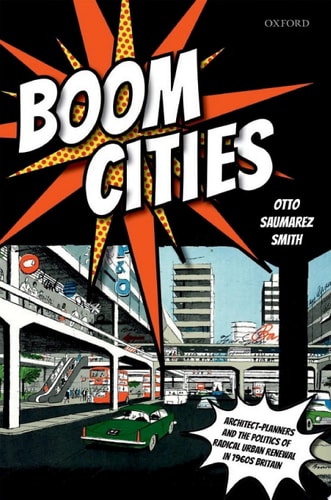
Boom Cities: Architect Planners and the Politics of Radical Urban Renewal in 1960s Britain
0
0
As an Amazon Associate and affiliate partner, Menrva Books earns from qualifying purchases. Learn more
Author Description
Boom Cities is the first published history of the profound transformations of British city centres in the 1960s. It has often been said that urban planners did more damage to Britain's cities than even the Luftwaffe had managed, and this study details the rise and fall of modernist urban planning, revealing its origins and the dissolution of the cross-party consensus, before the ideological smearing that has ever since characterized the high-rise towers, dizzying ring roads, and concrete precincts that were left behind. The rebuilding of British city centres during the 1960s drastically affected the built form of urban Britain, including places ranging from traditional cathedral cities through to the decaying towns of the industrial revolution. Boom Cities uncovers both the planning philosophy, and the political, cultural, and legislative background that created the conditions for these processes to occur across the country. Boom Cities reveals the role of architect-planners in these transformations. The volume also provides an unconventional account of the end of modernist approaches to the built environment, showing it from the perspective of planning and policy elites, rather than through the emergence of public opposition to planning.
Menrva's Summary
THE THESIS
This study investigates the political, legislative, and philosophical drivers behind the radical modernist urban renewal projects that reshaped British city centers during the 1960s. Otto Saumarez Smith, a historian of architecture and urbanism, utilizes archival research and policy analysis to challenge the conventional narrative that these transformations were merely the result of aesthetic failure. He argues that the rise and fall of these urban environments were deeply rooted in the shifting cross-party consensus of the era and the specific professional ambitions of the architect-planners who directed them.
THE SCOPE MAP
What You Will Find
- Analysis of the planning philosophies governing 1960s British urban development.
- Examination of the political and cultural climate that enabled large-scale concrete infrastructure projects.
- Documentation of the role played by planning and policy elites in the decision-making process.
- Historical context regarding the transition from traditional city layouts to modernist high-rise and ring-road designs.
Scope Limits
- The text focuses primarily on the perspective of planning elites rather than the history of public opposition or grassroots protest movements.
- It does not provide a comprehensive architectural critique of individual buildings, focusing instead on the systemic policy and political framework.
THE AUTHORITY PERSPECTIVE
Experts recognize this work as a significant contribution to the history of post-war British urbanism, particularly for its focus on the elite-driven nature of planning policy. Readers frequently note the academic rigor of the research and the author's ability to contextualize modernist architecture within the broader political shifts of the decade.
Page Count:
208
Publication Date:
2019-01-01
Publisher:
OUP Oxford
ISBN-10:
0192573470
ISBN-13:
9780192573476
History
Architecture
Urban renewal
urban planning
Modernism
History of Architecture
Professional Career & Trade
Great Britain
British History
Community Tags
Similar Books