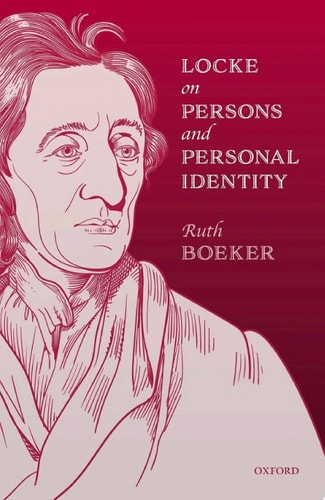
Locke on Persons and Personal Identity
0
0
As an Amazon Associate and affiliate partner, Menrva Books earns from qualifying purchases. Learn more
Author Description
Ruth Boeker offers a new perspective on Locke's account of persons and personal identity by considering it within the context of his broader philosophical project and the philosophical debates of his day. Her interpretation emphasizes the importance of the moral and religious dimensions of his view. By taking seriously Locke's general approach to questions of identity, Boeker shows that we should consider his account of personhood separately from his account of personal identity over time. On this basis, she argues that Locke endorses a moral account of personhood, according to which persons are subjects of accountability, and that his particular thinking about moral accountability explains why he regards sameness of consciousness as necessary for personal identity over time. In contrast to some neo-Lockean views about personal identity, Boeker argues that Locke's account of personal identity is not psychological per se, but rather his underlying moral, religious, metaphysical, and epistemic background beliefs are relevant for understanding why he argues for a consciousness-based account of personal identity. Taking his underlying background beliefs into consideration not only sheds light on why many of his early critics do not adopt Locke's view, but also shows why his view cannot be as easily dismissed as some of his critics assume.
Menrva's Summary
THE THESIS
This book investigates the core question of how John Locke’s account of persons and personal identity functions within his broader philosophical, moral, and religious framework. Ruth Boeker, a scholar of early modern philosophy, examines Locke’s writings to challenge contemporary interpretations that isolate his psychological theories. She argues that Locke’s definition of personhood is fundamentally rooted in moral accountability, which necessitates his specific focus on consciousness as the criterion for identity over time.
THE SCOPE MAP
What You Will Find
- An analysis of Locke's Essay Concerning Human Understanding regarding personhood and identity
- A contextualization of Locke's work within 17th-century philosophical and religious debates
- A distinction between Locke's account of personhood and his account of personal identity
- An examination of the moral, metaphysical, and epistemic background beliefs influencing Locke's conclusions
Scope Limits
- Does not provide a comprehensive biography of John Locke
- Does not focus on modern neuroscientific or physicalist theories of identity except as a contrast to Locke's original intent
THE AUTHORITY PERSPECTIVE
Scholars and students of early modern philosophy recognize this work as a significant contribution to the re-evaluation of Lockean thought. Experts highlight the text for its rigorous academic approach and its ability to clarify why Locke’s original arguments are often misunderstood by modern critics.
Page Count:
336
Publication Date:
2021-01-01
Publisher:
OUP Oxford
ISBN-10:
0192585967
ISBN-13:
9780192585967
Philosophy
Ethics
Metaphysics
Philosophy history
Epistemology
History & Surveys
Community Tags
Similar Books