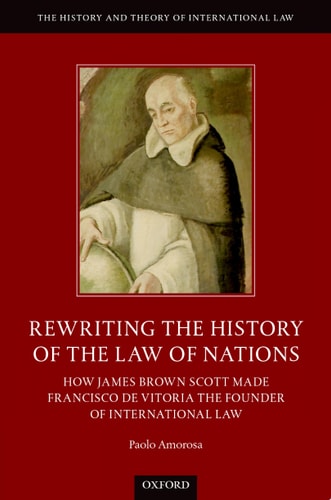
Rewriting the History of the Law of Nations
0
0
As an Amazon Associate and affiliate partner, Menrva Books earns from qualifying purchases. Learn more
Author Description
In The Interwar Years, International Lawyer James Brown Scott Wrote A Series Of Works On The History Of His Discipline. He Made The Case That The Foundation Of Modern International Law Rested Not, As Most Assumed, With The Seventeenth-century Dutch Thinker Hugo Grotius, But With Sixteenth-century Spanish Theologian Francisco De Vitoria. Far From Being An Antiquarian Assertion, The Spanish Origin Narrative Placed The Inception Of International Law In The Context Of The Discovery Of America, Rather Than In The European Wars Of Religion. The Recognition Of Equal Rights To The American Natives By Vitoria Was The Pedigree On Which Scott Built A Progressive International Law, Responsive To The Rise Of The United States As The Leading Global Power And Developments In International Organization Such As The Creation Of The League Of Nations. This Book Describes The Spanish Origin Project In Context, Relying On Scott's Biography, Changes In The Self-understanding Of The International Legal Profession, As Well As On Larger Social And Political Trends In Us And Global History. Keeping In Mind Vitoria's Persisting Role As A Key Figure In The Canon Of International Legal History, The Book Sheds Light On The Contingency Of Shared Assumptions About The Discipline And Their Unspoken Implications. The Legacy Of The International Law Scott Developed For The American Century Is Still With The Profession Today, In The Shape Of The Normalization And De-politicization Of Rights Language And Of Key Concepts Like Equality And Rule Of Law.
Menrva's Summary
THE THESIS
This book investigates the origins of modern international law by challenging the traditional narrative that credits Hugo Grotius, instead arguing for the influence of Francisco de Vitoria. Paolo Amorosa, a legal scholar, utilizes the biography and writings of James Brown Scott to examine how the 'Spanish origin' narrative was constructed during the interwar period. The work argues that this historical reinterpretation was a strategic effort to align international law with the rise of the United States and the development of international organizations like the League of Nations.
THE SCOPE MAP
What You Will Find
- Analysis of James Brown Scott's intellectual contributions to international legal history.
- Examination of the shift from Grotian foundations to the Spanish school of thought.
- Contextualization of legal theory within the geopolitical landscape of the early 20th century.
- Discussion on the normalization of rights language and the rule of law.
Scope Limits
- The book does not provide a comprehensive history of all international legal thought.
- It focuses primarily on the American perspective and the specific influence of Scott's project.
THE AUTHORITY PERSPECTIVE
Experts in legal history recognize this work as a critical examination of how disciplinary canons are constructed and maintained. Scholars frequently note the book's effectiveness in linking abstract legal theory to the specific political motivations of the interwar era.
Page Count:
368
Publication Date:
2019-01-01
Publisher:
Oxford University Press
ISBN-10:
0192589040
ISBN-13:
9780192589040
History
Biography
Legal History
International Law
Law
Community Tags
Similar Books