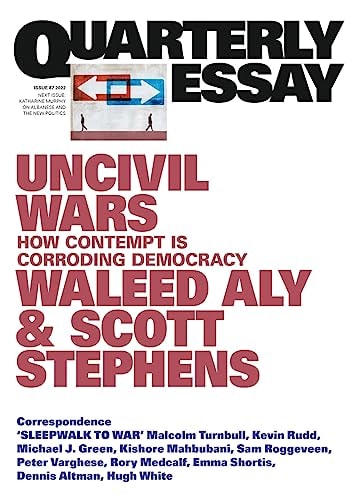
Uncivil Wars: How Contempt Is Corroding Democracy
0
0
As an Amazon Associate and affiliate partner, Menrva Books earns from qualifying purchases. Learn more
Author Description
Is our democracy corroding? In this original, eloquent essay, Waleed Aly and Scott Stephens explore the ethics and politics of public debate - and the threat it now faces. In a healthy society we need the capacity to disagree. Yet Aly and Stephens note a growing tendency to disdain and dismiss opponents, to treat them with contempt. This toxic partisanship has been imported from the United States, where it has been a temptation for both left and right. Aly and Stephens discuss some telling examples, analyse the role of the media, and look back to heroes of democracy who found a better way forward. Arguing that democracy cannot survive contempt, they draw on philosophy, literature and history to make an urgent case about the present. 'So what do we owe those with whom we might profoundly, even radically, disagree? In our time, the answer increasingly seems to be- Nothing. Absolutely nothing. We've come to regard our opponents as not much more than obstructions in the road, impediments standing between us and our desired end. We have grown disinclined to consider what it might mean to go on together meaningfully as partners within a shared democratic project. To put it bluntly, we see no future with our political opponents because we feel we have nothing to learn from them.' Waleed Aly & Scott Stephens, Uncivil Wars This issue also contains correspondence discussing Quarterly Essay 86, Sleepwalk to War, from Malcolm Turnbull, Kevin Rudd, Michael J. Green, Kishore Mahbubani, Sam Roggeveen, Peter Varghese, Rory Medcalf, Emma Shortis, Dennis Altman, Hugh White
Menrva's Summary
THE THESIS
This essay investigates the corrosive effect of contempt on contemporary democratic discourse and its potential to undermine the foundations of a healthy society. Waleed Aly and Scott Stephens, drawing on their backgrounds in media and public commentary, analyze the increasing tendency to disdain and dismiss political opponents, a trend they argue has been imported from the United States. They examine the role of media in exacerbating this issue and consult historical and philosophical examples of democratic leaders who fostered more constructive debate. Ultimately, the authors contend that democracy cannot survive pervasive contempt and make an urgent case for a renewed ethical approach to public disagreement.
THE SCOPE MAP
- Analysis of the ethics and politics of public debate in contemporary democracies.
- Exploration of the growing tendency towards disdain and dismissal of political opponents.
- Examination of the influence of US political discourse on other nations.
- Discussion of the role of media in shaping public debate and fostering partisanship.
- Historical and philosophical examples of figures who promoted constructive disagreement.
- An urgent argument for the necessity of mutual respect in maintaining democratic societies.
THE AUTHORITY PERSPECTIVE
The authors' exploration of contempt in public debate is framed as an urgent examination of a growing societal problem, drawing on philosophical, literary, and historical sources to support their argument. The essay's focus on the ethical dimensions of disagreement and its potential to undermine democratic institutions suggests a work intended to provoke thoughtful consideration among its readers. The inclusion of correspondence from notable figures discussing a previous essay indicates a platform that engages in ongoing public discourse and debate.
Page Count:
130
Publication Date:
2022-09-05
Publisher:
Black Incorporated
ISBN-10:
1760643564
ISBN-13:
9781760643560
Politics
Non-Fiction
Social Commentary
Current Affairs
Community Tags
Similar Books