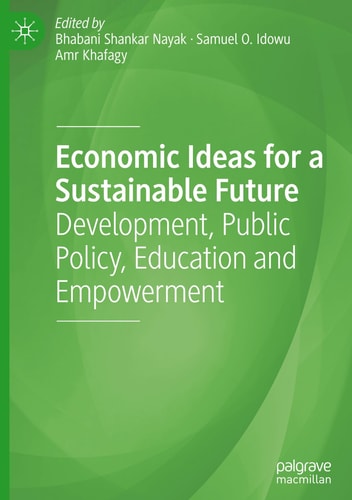
Economic Ideas for a Sustainable Future: Development, Public Policy, Education and Empowerment
0
0
As an Amazon Associate and affiliate partner, Menrva Books earns from qualifying purchases. Learn more
Author Description
This volume examines the concept of economic sustainability through the everyday practices of education, production, distribution, consumption, economic development, and public policy. It explores the economic systems and processes shaped by capitalism and how commodification has led to uneven and unsustainable development. Particular attention is given to how ideas of sustainability are constructed through education and how, without a critique of capitalism, these discussions often overlook the exploitation and commodification of both nature and human beings. This book advocates for a new paradigm based on socio-ecological transition that places sustainability and equity at the core of economic development and the political economy. It will be valuable to students and researchers interested in public policy, sustainable development, and the political economy.
Menrva's Summary
THE THESIS
This volume investigates how economic sustainability can be achieved by integrating principles of education, public policy, and socio-ecological transition. The book critically examines the current capitalist economic systems, highlighting how commodification contributes to uneven and unsustainable development. It specifically analyzes the role of education in constructing sustainability discourse, arguing that without a critique of capitalism, discussions often fail to address the exploitation of nature and human beings. Ultimately, it advocates for a new economic paradigm centered on sustainability and equity.
THE SCOPE MAP
- Analysis of economic systems shaped by capitalism and the impact of commodification.
- Exploration of how ideas of sustainability are constructed through education.
- Critique of discussions on sustainability that overlook exploitation and commodification.
- Advocacy for a new paradigm based on socio-ecological transition.
- Focus on integrating sustainability and equity into economic development and political economy.
- Examination of everyday practices in education, production, distribution, and consumption.
- Discussion of the role of public policy in achieving economic sustainability.
THE AUTHORITY PERSPECTIVE
The book is positioned as a valuable resource for students and researchers interested in public policy, sustainable development, and political economy. Its critical examination of capitalism and its proposed socio-ecological transition suggest a text that aims to challenge conventional economic thinking. The focus on education as a site for constructing sustainability discourse indicates an approach that bridges theory and practice. The work appears to offer a comprehensive analysis of current economic challenges and proposes a framework for more equitable and sustainable future development.
Page Count:
180
Publication Date:
2025-06-25
Publisher:
Springer Nature Switzerland
ISBN-10:
3031898230
ISBN-13:
9783031898235
Economics
Non-Fiction
Education
Public Policy
Community Tags
Similar Books