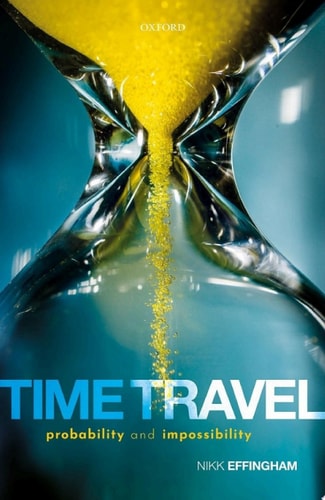
Time Travel: Probability and Impossibility
0
0
As an Amazon Associate and affiliate partner, Menrva Books earns from qualifying purchases. Learn more
Author Description
There are various arguments for the metaphysical impossibility of time travel. Is it impossible because objects could then be in two places at once? Or is it impossible because some objects could bring about their own existence? In this book, Nikk Effingham contends that no such argument is sound and that time travel is metaphysically possible. His main focus is on the Grandfather Paradox: the position that time travel is impossible because someone could not go back in time and kill their own grandfather before he met their grandmother. In such a case, Effingham argues that the time traveller would have the ability to do the impossible (so they could kill their grandfather) even though those impossibilities will never come about (so they won't kill their grandfather). He then explores the ramifications of this view, discussing issues in probability and decision theory. The book ends by laying out the dangers of time travel and why, even though no time machines currently exist, we should pay extra special care ensuring that nothing, no matter how small or microscopic, ever travels in time.
Menrva's Summary
THE THESIS
Is time travel metaphysically possible, or are the logical paradoxes associated with it insurmountable? Nikk Effingham, a philosopher specializing in metaphysics, examines the standard arguments against the possibility of time travel. He argues that common objections, such as the Grandfather Paradox, do not prove impossibility, but rather highlight specific constraints on probability and human agency within a temporal framework.
THE SCOPE MAP
What You Will Find
- Analysis of the Grandfather Paradox and causal loops
- Application of decision theory to temporal travel scenarios
- Philosophical arguments regarding the nature of existence and objects in time
- Exploration of the risks associated with microscopic temporal displacement
Scope Limits
- Does not provide a technical or engineering manual for building a time machine
- Does not focus on the physics of general relativity or wormholes
THE AUTHORITY PERSPECTIVE
Experts in analytic philosophy recognize this work as a rigorous contribution to the metaphysics of time. Readers frequently note the academic density of the prose, which requires a foundational understanding of modal logic and philosophical argumentation.
Page Count:
272
Publication Date:
2020-01-01
Publisher:
OUP Oxford
ISBN-10:
019258006X
ISBN-13:
9780192580061
Philosophy
Science
Decision Theory
Metaphysics
Logic
Space and time
Time Travel