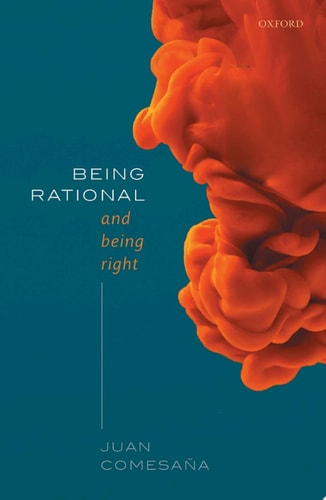
Being Rational and Being Right
0
0
As an Amazon Associate and affiliate partner, Menrva Books earns from qualifying purchases. Learn more
Author Description
In Being Rational and Being Right, Juan Comesaña argues for a cluster of theses related to the rationality of action and belief. His starting point is that rational action requires rational belief but tolerates false belief. From there, Comesaña provides a novel account of empirical evidence according to which said evidence consists of the content of undefeated experiences. This view, which Comesaña calls "Experientialism," differs from the two main views of empirical evidence on offer nowadays: Factualism, according to which our evidence is what we know, and Psychologism, according to which our experiences themselves are evidence. He reasons that Experientialism fares better than these rival views in explaining different features of rational belief and action. Comesaña embeds this discussion in a Bayesian framework, and discusses in addition the problem of normative requirements, the easy knowledge problem, and how Experientialism compares to Evidentialism, Reliabilism, and Comesaña's own (now superseded) Evidentialist Reliabilism.
Menrva's Summary
THE THESIS
What is the relationship between rational action and the nature of empirical evidence? Juan Comesaña, a professor of philosophy, investigates the intersection of belief and action through a formal lens. He proposes a framework called Experientialism, which posits that empirical evidence consists of the content of undefeated experiences, and argues that this model resolves persistent issues in epistemology better than Factualism or Psychologism.
THE SCOPE MAP
What You Will Find
- A defense of Experientialism as a theory of empirical evidence.
- Integration of Bayesian probability frameworks to model rational belief.
- Analysis of the easy knowledge problem and normative requirements.
- Comparative critique of Evidentialism and Reliabilism.
Scope Limits
- The text does not provide a comprehensive history of epistemology.
- It does not address non-empirical or a priori knowledge in significant detail.
THE AUTHORITY PERSPECTIVE
Scholars in the field of epistemology recognize this work as a significant contribution to the debate between internalist and externalist theories of justification. Readers frequently note the technical density of the prose, which requires a strong background in formal logic and contemporary analytic philosophy.
Page Count:
240
Publication Date:
2020-01-01
Publisher:
OUP Oxford
ISBN-10:
0192586955
ISBN-13:
9780192586957
Philosophy
Knowledge Theory
Logic
Academic
Rationality
Rationalism
Epistemology
Community Tags
Similar Books