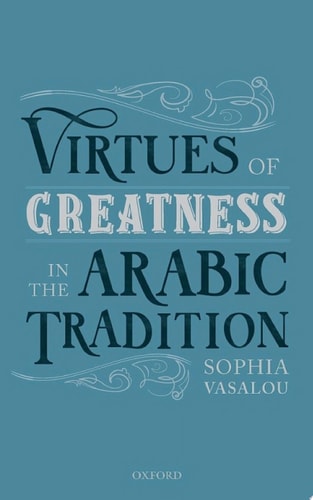
Virtues of Greatness in the Arabic Tradition
0
0
As an Amazon Associate and affiliate partner, Menrva Books earns from qualifying purchases. Learn more
Author Description
There are few ideals of character as distinctive and divisive as the ancient virtue of 'greatness of soul'. A larger-than-life virtue embodying nothing less than a vision of human greatness, it has often been seen as a relic of the Homeric world and its honour-loving heroes. In philosophy, it found its most celebrated expression in Aristotle's ethics, and it has lived on in the minds of philosophers and theologians in different forms ever since. Yet among the many lives this virtue has led in intellectual history, one remains conspicuously unwritten. This is the life it led in the Arabic tradition. A virtue of Greek warriors and their democratic epigones -- what happened when this splendid virtue made landfall in the Islamic world? This world, too, had its native heroes, who bequeathed their conception of extraordinary virtue to posterity. Heroic virtue is above all expressed in a boundless aspiration to what is greatest. Could we admire such virtue enough to want it as our own? What can we learn from the Arabic tradition of the virtues? In answering these questions, Sophia Vasalou elucidates a larger family of virtues that are united by their preoccupation with all things great: the 'virtues of greatness'. An important constituent of the character ideals expounded within the Islamic world, this type of virtue tells us as much about the content of these ideals as about their kaleidoscopic genealogies.
Menrva's Summary
THE THESIS
This book investigates the historical and philosophical trajectory of the concept of 'greatness of soul' as it transitioned from Greek antiquity into the Arabic and Islamic intellectual traditions. Sophia Vasalou, a scholar specializing in Islamic philosophy and ethics, examines how this specific virtue was interpreted, adapted, and expanded upon by thinkers within the Islamic world. By analyzing primary texts and historical contexts, she argues that these 'virtues of greatness' represent a distinct and significant family of character ideals that reflect both the influence of Aristotelian thought and the unique cultural values of the Islamic tradition.
THE SCOPE MAP
What You Will Find
- A comparative analysis of Aristotelian 'greatness of soul' and its Arabic counterparts.
- An examination of heroic virtue and its role in Islamic character formation.
- A genealogical study of how Greek philosophical concepts were integrated into Islamic ethics.
Scope Limits
- The text does not provide a comprehensive history of all Islamic virtues, focusing specifically on those related to greatness.
- It does not attempt to resolve modern ethical debates but rather focuses on historical and philosophical reconstruction.
THE AUTHORITY PERSPECTIVE
Scholars and readers in the field of Islamic philosophy recognize this work as a significant contribution to the study of virtue ethics in non-Western contexts. Experts frequently note the clarity of Vasalou's prose and her ability to bridge the gap between classical Greek philosophy and the rich, often overlooked, Arabic intellectual tradition.
Page Count:
192
Publication Date:
2019-01-01
Publisher:
OUP Oxford
ISBN-10:
0192580590
ISBN-13:
9780192580597
Philosophy
Religion
Ethics
Virtues
Islamic Studies
History & Surveys
Intellectual History
Community Tags
Similar Books