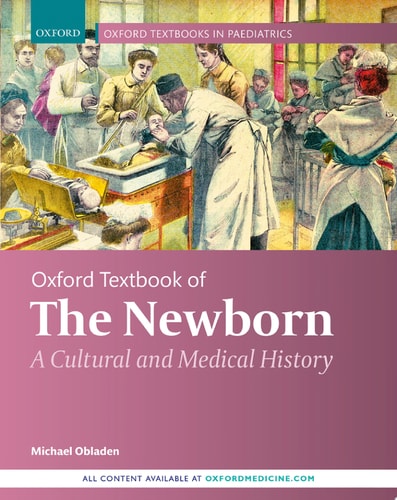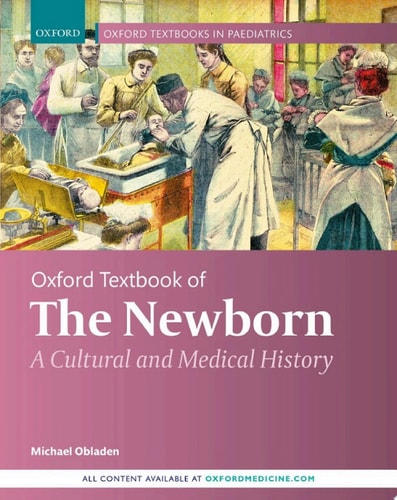
Oxford Textbook of the Newborn: A Cultural and Medical History
0
0
As an Amazon Associate and affiliate partner, Menrva Books earns from qualifying purchases. Learn more
Author Description
Well into the 20th century, one in four newborns failed to survive their first year of life. It was after World War II that medicine "discovered" the newborn as a human being entitled to medical treatment and prioritised care. Since its definition by Alexander Schaffer in 1960, neonatology has evolved into a mature, innovative, and ethical field. A large number of medical professionals' care for neonates, yet no definitive medical history of the newborn has been available until now. The Oxford Textbook of the Newborn: A Cultural and Medical History offers readers a unique and authoritative resource on the 3000-year history of the newborn within Western societies. Written by Professor Michael Obladen, a leading voice in neonatology, this book reflects on our perception of newborns, from the earliest days of human thought, through to the traces that remained in medieval life and persist today. It unearths ideas and evidence of societies' perceptions of newborns through a beautifully illustrated, impressive and often never-seen-before set of historical sources from libraries, archives, churches, excavation fields, and hospital charts around the world. Split into 8 sections which each cover aspects of the natural lifecycle of a neonate, this book demonstrates the impact of religion, law, ethics, philosophy and culture on newborns' quality of life, and covers fascinating topics such as the rites of passage for the newborn, infanticide, opium use, breastfeeding, and artificial feeding. Each chapter is written in an accessible style and includes high-quality historical illustrations which really bring the subject to life.
Menrva's Summary
THE THESIS
This text investigates the 3000-year evolution of the newborn's status within Western society, examining how cultural, religious, and legal frameworks have shaped medical perceptions and care. Professor Michael Obladen, a distinguished expert in neonatology, synthesizes extensive archival research to trace the transition of the neonate from a neglected demographic to a prioritized subject of modern medical intervention. The work argues that the current state of neonatal care is the result of a complex interplay between historical societal attitudes and the post-World War II emergence of neonatology as a formal medical discipline.
THE SCOPE MAP
What You Will Find
- A comprehensive 3000-year historical survey of neonatal perception in Western societies.
- Analysis of the impact of religion, law, philosophy, and ethics on infant mortality and care.
- Examination of specific historical practices including infanticide, breastfeeding, and artificial feeding.
- A collection of rare historical illustrations sourced from global archives, libraries, and hospital records.
Scope Limits
- The text focuses primarily on Western societal perspectives and may not provide exhaustive coverage of non-Western neonatal history.
- The analysis is structured around the natural lifecycle of the neonate rather than a strictly chronological medical timeline.
THE AUTHORITY PERSPECTIVE
Experts recognize this work as a foundational resource for understanding the intersection of medical practice and cultural history in paediatrics. Readers frequently note the accessibility of the prose despite the academic depth of the research and the extensive use of primary source evidence.
Page Count:
463
Publication Date:
2021-01-01
Publisher:
OUP Oxford
ISBN-10:
0192597213
ISBN-13:
9780192597212
Social History
MEDICAL History
Medical
Allied Health
Cultural History
Paediatrics
Medicine
Neonatology