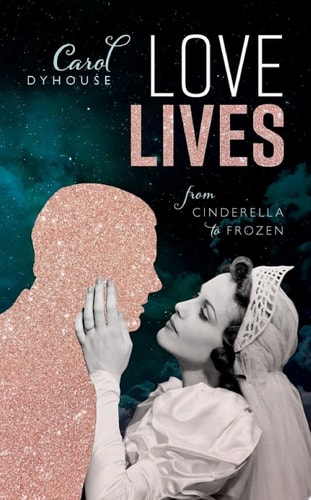
Love Lives: From Cinderella to Frozen
0
0
As an Amazon Associate and affiliate partner, Menrva Books earns from qualifying purchases. Learn more
Author Description
The story of how women's lives, loves, and dreams have been re-shaped since 1950, the year of Walt Disney's Cinderella and a time when teenage girls dreamed of marriage, Mr Right, and happy endings... Cinderella stories captured the imagination of girls in the 1950s, when dreams of meeting the right man could seem like a happy ending, a solution to life's problems. But over the next fifty years women's lives were transformed, not by the magic wand of a fairy godmother, nor by marrying princes, but by education, work, birth control - and feminism. However, while widening opportunities for women were seen as progress, feminists were regularly caricatured as man-haters, cast in the role of ugly sisters, witches or wicked fairies in the fairy-tale. This book is about the reshaping of women's lives, loves and dreams since 1950, the year in which Walt Disney's film Cinderella gave expression to popular ideas of romance, and at a time when marriage was a major determinant of female life chances and teenage girls dreamed of Mr Right and happy endings. It ends with the runaway success of Disney's Frozen, in 2013 - a film with relevance to very different times. Along the way, it illuminates how women's expectations and emotional landscapes have shifted, asking bold questions about how women's lives have been transformed since 1950. How have women's changing life experiences been mirrored in new expectations about marriage, intimacy, and family life? How have new forms of independence through education and work, and greater control over childbearing, altered women's life ambitions? And were feminists right to believe that sexual equality would improve relationships between men and women?
Menrva's Summary
THE THESIS
This book investigates how the cultural narratives of romance and the lived realities of women have evolved from the mid-twentieth century to the present day. Carol Dyhouse, a historian specializing in the social history of women, utilizes a framework that contrasts the idealized fairy-tale tropes of the 1950s with the complex socio-economic shifts of the subsequent decades. By analyzing the transition from the domestic expectations of the post-war era to the modern independence reflected in contemporary media, she argues that the definition of a 'happy ending' has been fundamentally rewritten by education, reproductive autonomy, and feminist progress.
THE SCOPE MAP
What You Will Find
- A comparative analysis of cultural artifacts, specifically Disney films from 1950 to 2013.
- Historical examination of marriage, career, and family dynamics in the UK and US.
- Discussion of the impact of second-wave feminism on public perception and personal relationships.
Scope Limits
- The analysis focuses primarily on Western cultural contexts and may not reflect global variations in gender roles.
- The text prioritizes sociological and cultural trends over exhaustive economic data sets.
THE AUTHORITY PERSPECTIVE
Scholars and readers frequently note the accessible yet rigorous nature of Dyhouse's prose, which effectively bridges the gap between academic history and popular cultural criticism. Experts highlight this as a valuable resource for understanding the intersection of media representation and the shifting social landscape of the last seventy years.
Page Count:
285
Publication Date:
2021-01-01
Publisher:
OUP Oxford
ISBN-10:
0192597639
ISBN-13:
9780192597632
History
Sociology
Woman Studies
Womens Studies
Gender Studies
Community Tags
Similar Books