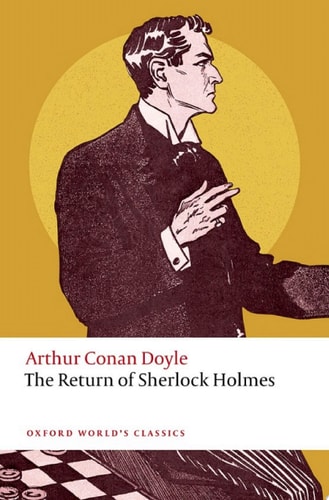
The Return of Sherlock Holmes
0
0
As an Amazon Associate and affiliate partner, Menrva Books earns from qualifying purchases. Learn more
Author Description
Arthur Conan Doyle famously killed off Sherlock Holmes in 1893, in the short story 'The Final Problem', but was tempted to bring him back to life ten years later, in the thirteen tales that comprise The Return of Sherlock Holmes. While the outcry that supposedly followed Holmes' death was mostly apocryphal (the claim that readers wore black armbands in mourning has been frequently cited but never actually proved), by 1893 there was a substantial readership for Holmes' two series of adventures published in the Strand Magazine and two earlier novels. Doyle returned to Holmes in 1901-2 with The Hound of the Baskervilles, a novel set before the events of 'The Final Problem'; the commercial success of the serialisation in the Strand led Doyle to consider reviving the Holmes stories on a longer-term basis. Accordingly, in 1903 Doyle was contracted by the American magazine Collier's Weekly to supply six more Holmes stories; the agreement was extended to six more, with a final extension for a thirteenth story ('The Second Stain') that Doyle (mistakenly) believed to be the closing episode of the Holmes adventures. These thirteen tales make up this volume.
Menrva's Summary
THE PULSE
Following a decade-long hiatus after his supposed death, Sherlock Holmes reappears in London to resume his investigative partnership with Dr. John Watson. Holmes must navigate the complexities of a changing society while applying his rigorous deductive methods to solve a series of baffling criminal cases. Opposed by cunning adversaries and the limitations of early twentieth-century forensic science, the protagonist relies on his keen observation and Watson's loyal documentation to restore order. The narrative framework consists of a collection of short stories, primarily presented through Watson's retrospective accounts of their shared investigations.
INSIDE THE PAGES
- Episodic narrative structure featuring thirteen distinct cases
- First-person perspective from the viewpoint of Dr. John Watson
- Emphasis on logical deduction and forensic observation
- Atmospheric depiction of Edwardian London and the English countryside
- Recurring character dynamics between Holmes and Watson
- Inclusion of classic tropes such as the locked-room mystery and the pursuit of international criminals
- Focus on the intellectual challenge of the crime rather than physical action
- Integration of social commentary regarding the era's class structures and legal systems
THE COLLECTIVE ECHO
Readers frequently highlight the seamless transition of the characters into a new century while maintaining the established tone of the earlier adventures. Discussion often centers on the ingenuity of the individual puzzles and the enduring chemistry between the two leads. Critics often note that while the stories vary in complexity, they remain foundational examples of the detective genre. The collection is widely regarded as a successful revival that solidified the status of the protagonist in popular culture. Readers appreciate the balance between the procedural elements of the investigations and the character-driven moments that define the partnership.
Page Count:
336
Publication Date:
2023-01-01
Publisher:
OUP Oxford
ISBN-10:
019259866X
ISBN-13:
9780192598660
Mystery
Detective
Classic Literature
Short Stories
Fairy Tales
Victorian
Community Tags
Other Editions(22)
OUP Oxford
2023
Default edition
Independently Published
2021
East India Publishing Company
2020
Independently Published
2020

Independently Published
2020

iBoo Press House
2020
BookRix
2018

Independently Published
2018

Arcturus Publishing
2017
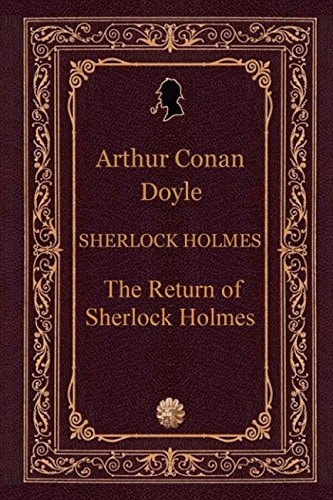
Independently Published
2016

Cambridge Scholars Publishing
2010

Headline Review
2007

eBooksLib
2005

1st World Library - Literary Society
2004
1st World Library
2004
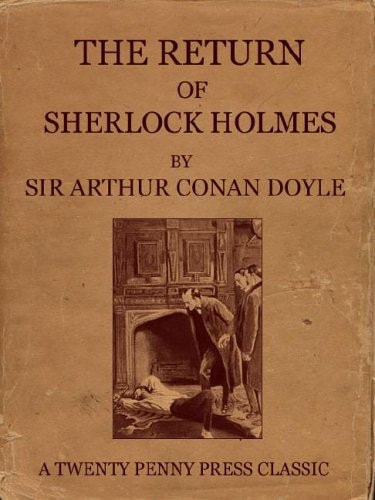
Twenty Penny Press
2002

IndyPublish. com
2002

Logos Res Systems Inc
2000

CIHM / Morang & Co.
1994
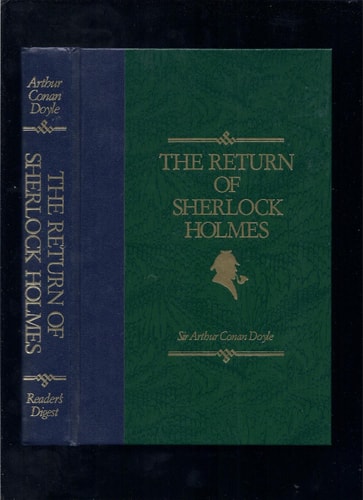
Reader's Digest
1992
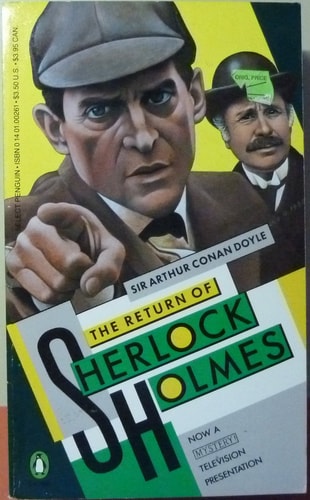
Penguin Books
1987
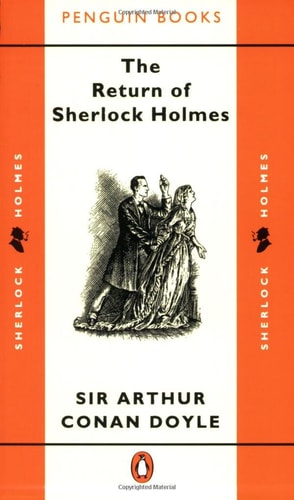
Penguin Books
1982
Similar Books
Reader Comments
Share Your Thoughts
No comments yet. Be the first to share your thoughts!