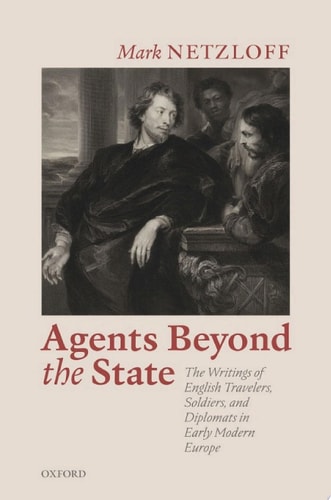
Agents beyond the State: The Writings of English Travelers, Soldiers, and Diplomats in Early Modern Europe
0
0
As an Amazon Associate and affiliate partner, Menrva Books earns from qualifying purchases. Learn more
Author Description
The early modern period is often seen as a pivotal stage in the emergence of a recognizably modern form of the state. Agents beyond the State returns to this context in order to examine the literary and social practices through which the early modern state was constituted. The state was defined not through the elaboration of theoretical models of sovereignty but rather as an effect of the literary and professional lives of its extraterritorial representatives. Netzloff focuses on the textual networks and literary production of three groups of extraterritorial agents: travelers and intelligence agents, mercenaries, and diplomats. These figures reveal the extent to which the administration of the English state as well as definitions of national culture were shaped by England's military, commercial, and diplomatic relations in Europe and other regions across the globe. Netzloff emphasizes the transnational contexts of early modern state formation, from the Dutch Revolt and relations with Venice to the role of Catholic exiles and nonstate agents in diplomacy and international law. These global histories of travel, service, and labor additionally transformed definitions of domestic culture, from the social relations of classes and regions to the private sphere of households and families. Literary writing and state service were interconnected in the careers of Fynes Moryson, George Gascoigne, and Sir Henry Wotton, among others. As they entered the realm of print and addressed a reading public, they introduced the practices of governance to an emerging public sphere.
Menrva's Summary
THE THESIS
This book investigates how the early modern English state was constructed through the literary and professional activities of its extraterritorial representatives rather than through theoretical models of sovereignty. Mark Netzloff, an academic specializing in early modern literature and culture, utilizes a framework that connects state administration to the textual production of individuals operating outside England's borders. By analyzing the writings of travelers, soldiers, and diplomats, the author argues that these figures were instrumental in defining national culture and governance during a period of significant geopolitical transition.
THE SCOPE MAP
What You Will Find
- Analysis of textual networks produced by intelligence agents, mercenaries, and diplomats.
- Examination of the intersection between literary production and state service in the careers of figures like Fynes Moryson, George Gascoigne, and Sir Henry Wotton.
- Exploration of transnational contexts including the Dutch Revolt, relations with Venice, and the influence of Catholic exiles.
Scope Limits
- The study focuses primarily on English agents and their specific impact on the English state.
- It does not provide a comprehensive history of all European state formation, focusing instead on the specific role of extraterritorial representatives.
THE AUTHORITY PERSPECTIVE
Scholars in the field of early modern studies recognize this work as a significant contribution to the understanding of how literature and statecraft intersected during the period. Readers frequently note the academic density of the prose and the author's meticulous archival research into the professional lives of early modern figures.
Page Count:
279
Publication Date:
2020-01-01
Publisher:
OUP Oxford
ISBN-10:
0192599879
ISBN-13:
9780192599872
History
Diplomatic History
History - Modern
English History
English
English & College Success
Literary Criticism
Community Tags
Similar Books