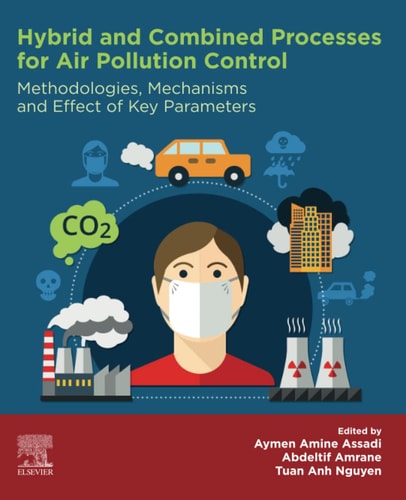
Hybrid and Combined Processes for Air Pollution Control: Methodologies, Mechanisms and Effect of Key Parameters
0
0
As an Amazon Associate and affiliate partner, Menrva Books earns from qualifying purchases. Learn more
Author Description
Hybrid and Combined Processes for Air Pollution Control: Methodologies, Mechanisms and Effect of Key Parameters provides an exhaustive inventory of hybrid and combined processes in the field of air treatment. The book covers principles, the effect of key parameters, technologies and reactors of the processes and their implementation, from lab-scale to industrial scale, also identifying future trends. Sections discuss effects on the environment and living beings, identify novel techniques and innovations, and offer a thorough assessment of the strengths and weaknesses of each. In this well-structured book, chapters are linked to the type of treatment, with a significant part dealing with treatment by transfer processes: (absorption and absorption) and on destruction treatments, such as advanced oxidation processes. Helps readers select the most appropriate process for air pollution treatment and control Provides a comprehensive overview of process performance under real conditions, from lab to industrial scale Identifies future trends in industrial developments and innovation
Menrva's Summary
THE THESIS
This book comprehensively inventories hybrid and combined processes for air treatment, detailing their methodologies, mechanisms, and the influence of key parameters. It covers the fundamental principles, the impact of critical variables, and the technologies and reactors employed in these processes, spanning from laboratory experiments to industrial applications. The work also identifies emerging trends and discusses the environmental and biological effects of air pollution control. It aims to guide readers in selecting optimal treatment processes by providing a thorough assessment of their strengths and weaknesses under real-world conditions.
THE SCOPE MAP
- Exhaustive inventory of hybrid and combined processes for air treatment.
- Detailed coverage of principles, mechanisms, and effect of key parameters.
- Discussion of technologies, reactors, and implementation from lab to industrial scale.
- Analysis of environmental and living being effects.
- Identification of novel techniques, innovations, and future trends.
- Chapters linked to treatment type, with focus on transfer processes (absorption, adsorption) and destruction treatments (advanced oxidation processes).
- Assessment of strengths and weaknesses of each process.
- Guidance for selecting the most appropriate air pollution treatment and control process.
THE AUTHORITY PERSPECTIVE
The book is structured to provide a comprehensive overview of air pollution control methodologies, focusing on hybrid and combined processes. It aims to be a practical resource for selecting appropriate treatment techniques by detailing their performance under various conditions and assessing their pros and cons. The inclusion of lab-to-industrial scale insights and future trend identification suggests a focus on both current applications and forward-looking research. The detailed examination of mechanisms and parameters indicates a text geared towards engineers and researchers in the field.
Page Count:
376
Publication Date:
2022-05-24
Publisher:
Elsevier Science
ISBN-10:
0323884490
ISBN-13:
9780323884495
Science
Non-Fiction
Chemical Engineering
Process Engineering
Community Tags
Similar Books