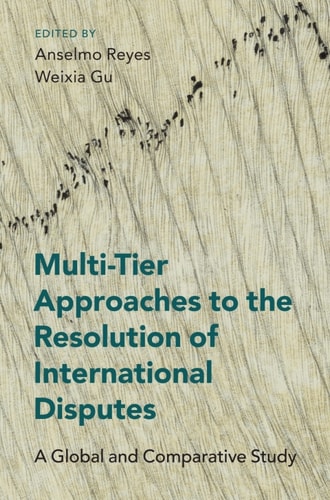
Multi-Tier Approaches to the Resolution of International Disputes
0
0
As an Amazon Associate and affiliate partner, Menrva Books earns from qualifying purchases. Learn more
Author Description
Multi-tier dispute resolution (MDR) entails an early attempt at mediation followed by arbitration or litigation if mediation is unsuccessful. Seemingly, everyone acknowledges MDR's attractiveness as a means of resolving disputes due to its combination of the flexibility and informality of mediation with the rigour and formality of arbitration or litigation. Yet, the question is why, except in China and some Asian jurisdictions, MDR is not resorted to around the world and MDR clauses in commercial contracts remain relatively uncommon. This book responds to that question by (1) surveying global regulatory approaches frameworks for MDR, (2) comparing MDR trends in Asia and the wider world, (3) identifying MDR's strengths and weaknesses, and (4) prescribing ways to address MDR's weaknesses (the enforceability of MDR clauses, the difficulties arising when the same person acts as mediator and decision-maker in the same dispute, and the enforcement of mediated settlement agreements resulting from MDR).
Menrva's Summary
THE THESIS
This book investigates the underutilization of multi-tier dispute resolution (MDR) globally, despite its perceived advantages. The authors examine why MDR, which combines mediation with arbitration or litigation, is not widely adopted outside of Asia. They analyze regulatory frameworks, compare trends between Asia and the rest of the world, and identify the inherent strengths and weaknesses of MDR. The book proposes solutions to address these weaknesses, focusing on issues such as the enforceability of MDR clauses, the challenges of dual roles in mediation and decision-making, and the enforcement of mediated settlement agreements.
THE SCOPE MAP
- Survey of global regulatory approaches and frameworks for Multi-Tier Dispute Resolution (MDR).
- Comparative analysis of MDR trends in Asia versus the wider international landscape.
- Identification and discussion of the inherent strengths and weaknesses of MDR.
- Prescriptive strategies for addressing MDR's identified weaknesses.
- Examination of the enforceability of MDR clauses in commercial contracts.
- Analysis of difficulties arising when the same individual acts as both mediator and decision-maker.
- Exploration of the enforcement of mediated settlement agreements within MDR processes.
THE AUTHORITY PERSPECTIVE
The book addresses a critical gap in the understanding and application of Multi-Tier Dispute Resolution (MDR) on a global scale. It aims to explain why this seemingly attractive method of dispute resolution, which blends the flexibility of mediation with the finality of arbitration or litigation, has not seen wider adoption. The authors' comparative approach, contrasting Asian jurisdictions with the rest of the world, offers a unique perspective on the challenges and potential solutions for MDR. By identifying specific weaknesses such as enforceability issues and role conflicts, the book provides a foundation for future development and implementation of MDR.
Page Count:
336
Publication Date:
2021-12-16
Publisher:
Cambridge University Press
ISBN-10:
1108848176
ISBN-13:
9781108848176
Non-Fiction
Business
Politics
International Law
Asian Law
Commercial law
Community Tags
Similar Books