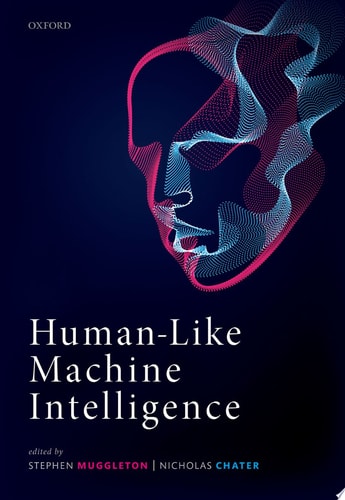
Human-Like Machine Intelligence
0
0
As an Amazon Associate and affiliate partner, Menrva Books earns from qualifying purchases. Learn more
Author Description
In recent years there has been increasing excitement concerning the potential of Artificial Intelligence to transform human society. This book addresses the leading edge of research in this area. The research described aims to address present incompatibilities of Human and Machine reasoning and learning approaches. According to the influential US funding agency DARPA (originator of the Internet and Self-Driving Cars) this new area represents the Third Wave of Artificial Intelligence (3AI, 2020s-2030s), and is being actively investigated in the US, Europe and China. The chapters of this book have been authored by a mixture of UK and other international specialists. Some of the key questions addressed by the Human-Like Computing programme include how AI systems might 1) explain their decisions effectively, 2) interact with human beings in natural language, 3) learn from small numbers of examples and 4) learn with minimal supervision. Solving such fundamental problems involves new foundational research in both the Psychology of perception and interaction as well as the development of novel algorithmic approaches in Artificial Intelligence.
Menrva's Summary
THE THESIS
This book investigates the foundational research required to bridge the gap between human cognitive processes and machine learning capabilities. Jonathan L. Kvanvig compiles contributions from international specialists to examine the 'Third Wave' of Artificial Intelligence, focusing on systems that can reason, learn, and interact in ways analogous to human intelligence. The text argues that achieving this requires a synthesis of psychological research on human perception and the development of novel algorithmic frameworks.
THE SCOPE MAP
What You Will Find
- Analysis of the 'Third Wave' of AI as defined by DARPA.
- Methodologies for AI decision explainability and natural language interaction.
- Approaches to machine learning with minimal supervision and small data sets.
- Interdisciplinary research combining psychology and computer science.
Scope Limits
- The text does not provide a comprehensive history of all AI developments prior to the 2020s.
- It does not offer a consumer-facing guide for implementing AI software.
THE AUTHORITY PERSPECTIVE
Experts recognize this as a specialized collection of research papers detailing the current objectives of the Human-Like Computing programme. Readers frequently note the academic density of the prose, which is intended for researchers and professionals in the field of artificial intelligence.
Page Count:
842
Publication Date:
2021-01-01
Publisher:
OUP Oxford
ISBN-10:
0192607464
ISBN-13:
9780192607461
Technology
Philosophy of
Computer Science
Professional Career & Trade
Community Tags
Similar Books