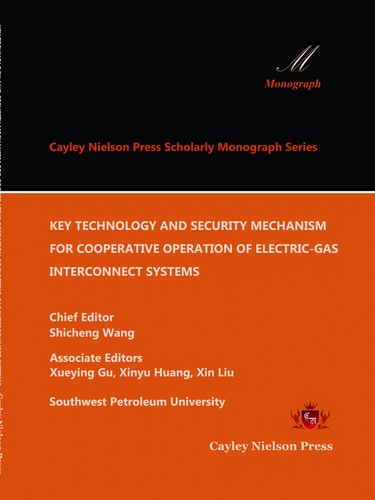
Key Technology and Security Mechanism for Cooperative Operation of Electric-Gas Interconnect Systems
0
0
As an Amazon Associate and affiliate partner, Menrva Books earns from qualifying purchases. Learn more
Author Description
With the acceleration of China's “carbon peak, carbon neutrality” process and the deepening of energy transformation, the demands for flexible regulated resources in the power system will be further increased. The installed capacity of gas turbines will have a great room for its growth. Combined with the speed-up development of electricity-to-gas technology, the electricity-gas interconnection systems (EGIS) are becoming the essential energy carriers. The construction of EGIS promotes renewable energy consumption and low-carbon transition of the energy systems. At the same time, it also brings about some potential security risks. The interdependence of the heterogeneous energy flows makes it possible that a failure on either side of the electric or natural gas system may spread across the systems through the coupling devices, eventually resulting in the cascading failures in the EGIS. There is an urgency to establish an effective coordinated security mechanism to strengthen the regular coordinated risk management, the coordinated control, and the energy exchange capability under extreme events. This book reviews the latest research progresses on the coordinated security mechanisms for the EGIS.
Menrva's Summary
THE THESIS
The integration of electric and natural gas systems presents significant opportunities for energy transition but introduces complex security challenges. The acceleration of China's 'carbon peak, carbon neutrality' goals and energy transformation necessitates increased flexible regulated resources, driving growth in gas turbines and electricity-to-gas technology. This integration, forming Electricity-Gas Interconnection Systems (EGIS), is crucial for renewable energy consumption and low-carbon transitions. However, the interdependence of these systems creates vulnerabilities where failures in one can cascade to the other, highlighting an urgent need for effective coordinated security mechanisms for risk management, control, and energy exchange during extreme events.
THE SCOPE MAP
- Latest research progress on coordinated security mechanisms for EGIS.
- Analysis of the security risks and cascading failure potentials in interconnected electric-gas systems.
- Discussion on the role of EGIS in promoting renewable energy consumption and low-carbon energy transitions.
- Examination of the increasing demand for flexible regulated resources in power systems.
- Insights into the growth of gas turbines and electricity-to-gas technology.
- Strategies for coordinated risk management, coordinated control, and energy exchange capabilities under extreme events.
THE AUTHORITY PERSPECTIVE
This book addresses the critical and evolving field of interconnected energy systems, specifically focusing on the security mechanisms required for Electricity-Gas Interconnection Systems (EGIS). The subject matter indicates a technical and research-oriented approach, likely aimed at engineers, researchers, and policymakers involved in energy infrastructure and transition strategies. The emphasis on coordinated security and risk management suggests a focus on practical applications and theoretical advancements within this specialized domain.
Page Count:
638
Publication Date:
2023-11-10
Publisher:
Cayley Nielson Press, Inc.
ISBN-10:
195727414X
ISBN-13:
9781957274140
Science
Non-Fiction
Energy Systems
Natural Gas
Community Tags
Similar Books