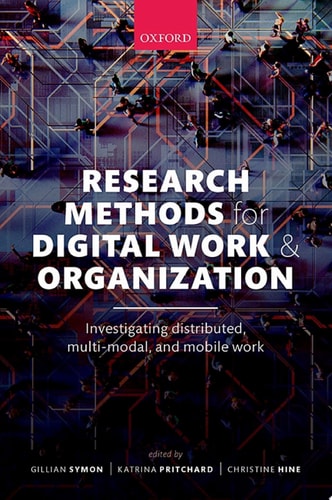
Research Methods for Digital Work and Organization: Investigating Distributed, Multi-Modal, and Mobile Work
0
0
As an Amazon Associate and affiliate partner, Menrva Books earns from qualifying purchases. Learn more
Author Description
Digital work has become increasingly common, taking a wide variety of forms including working from home, mobile work, gig work, crowdsourcing, and online volunteering. It is organizationally, interpretively, spatially, and temporally complex. An array of innovative methodologies have begun to emerge to capture this complexity, whether through re-purposing existing tools, devising entirely novel methods, or mixing old and new. This volume brings together some of these techniques in an accessible sourcebook for management, business, organizational, and work researchers. It presents a range of innovative methods which capture and analyse digitally-related work practices through reflexive accounts of real-world research projects, and elucidates the range of challenges such methods may raise for research practice. It outlines debates and recommendations, and provides further reading and information to support research practice. The book is organised in four sections that reflect different areas of focus and methodological approaches: working with screens; digital working practices; distributed work and organizing; and digital traces of work. It then concludes by reflecting on the methodological issues, research ethics, requisite skills, and future of research given the intensification of digital work during a global pandemic that has impacted all aspects of our lives.
Menrva's Summary
THE THESIS
This volume investigates the methodological challenges and innovative techniques required to study the increasing complexity of digital, distributed, and mobile work environments. The authors, Melissa Aronczyk and Maria I. Espinoza, compile a collection of reflexive accounts from real-world research projects to provide a practical sourcebook for scholars in management and organizational studies. By examining how traditional methods are adapted or replaced in digital contexts, the text establishes a framework for analyzing work practices that are spatially and temporally fragmented.
THE SCOPE MAP
What You Will Find
- Methodological approaches for studying screen-based work and digital traces.
- Analysis of distributed work, gig work, and crowdsourcing dynamics.
- Reflexive case studies detailing the practical application of research tools.
- Discussions on research ethics and requisite skills for digital ethnography.
Scope Limits
- The text focuses primarily on management and organizational research rather than technical software development.
- It does not provide a comprehensive history of digital labor, focusing instead on the tools used to study it.
THE AUTHORITY PERSPECTIVE
Experts identify this volume as a practical resource for researchers navigating the shift toward remote and digital-first organizational structures. Readers frequently note the clarity of the reflexive accounts, which help bridge the gap between theoretical research design and the messy reality of fieldwork.
Page Count:
401
Publication Date:
2021-01-01
Publisher:
OUP Oxford
ISBN-10:
0192604791
ISBN-13:
9780192604798
Workplace Studies
Research Methods
Community Tags
Similar Books