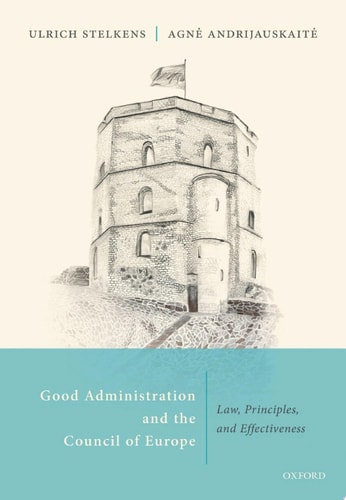
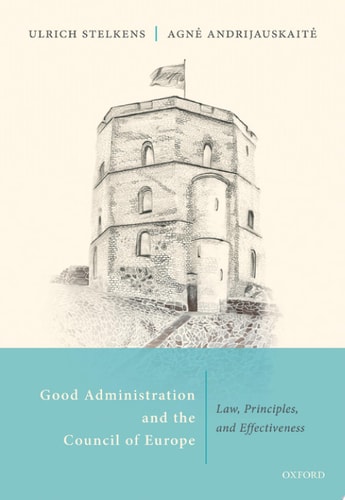
Good Administration and the Council of Europe: Law, Principles, and Effectiveness
0
0
As an Amazon Associate and affiliate partner, Menrva Books earns from qualifying purchases. Learn more
Author Description
Good Administration and the Council of Europe: Law, Principles, and Effectiveness examines the existence and effectiveness of written and unwritten standards of good administration developed within the framework of the Council of Europe (CoE) and in the case law of the European Court of Human Rights. These standards - called 'pan- European general principles of good administration' - cover the entire range of general organizational, procedural, and substantive legal institutions meant to ensure a democratically legitimized, open, and transparent administration respecting the rule of law. They are about the 'limiting function' of administrative law: its function to protect individuals from arbitrary power, to legitimize administrative action, and to combat corruption. This book analyses the sources and functions of the pan-European general principles of good administration and seeks to uncover how deeply they are rooted in the domestic legal systems of the CoE Member States. It comprises 28 country reports dedicated to an in-depth exploration of the impact of these standards on the national legal systems of the Member States written by respective experts on these systems. It argues that the pan-European general principles of good administration lead to a certain harmonization of the legal orders of the Member States with regard to the limiting function of administrative law despite the many fundamental differences between their administrative and legal systems. It comes to the further conclusion that the pan-European general principles of good administration can be considered as a concretization of the founding values of the CoE and describes the 'administrative law obligations' a Member State entered into when joining the CoE.
Menrva's Summary
THE THESIS
This book investigates the existence, legal basis, and practical effectiveness of pan-European general principles of good administration established by the Council of Europe. Authors Agnė Andrijauskaitė and Ulrich Stelkens, both scholars in administrative law, synthesize a vast array of case law from the European Court of Human Rights to argue that these principles serve as a critical mechanism for harmonizing administrative standards across diverse member states. By examining the 'limiting function' of administrative law, the authors demonstrate how these standards protect individuals from arbitrary power and reinforce the founding democratic values of the Council of Europe.
THE SCOPE MAP
What You Will Find
- A comprehensive analysis of pan-European general principles regarding organizational, procedural, and substantive administrative law.
- 28 detailed country reports authored by regional experts assessing the domestic impact of these standards.
- A theoretical framework linking administrative law to the prevention of corruption and the promotion of transparency.
Scope Limits
- The text focuses primarily on the 'limiting function' of administrative law rather than the operational efficiency of administrative bodies.
- It does not provide a comparative analysis of non-European administrative systems.
THE AUTHORITY PERSPECTIVE
Legal scholars and practitioners identify this work as a foundational reference for understanding the intersection of Council of Europe standards and national administrative practices. Readers frequently note the academic density of the prose, which is tailored for researchers and legal professionals seeking a rigorous examination of European administrative harmonization.
Page Count:
958
Publication Date:
2020-01-01
Publisher:
OUP Oxford
ISBN-10:
0192605941
ISBN-13:
9780192605948
Professional Career & Trade
Law
Administrative Law
Governance
European Law
Human rights
Community Tags
Other Editions(2)
Similar Books



Reader Comments
Share Your Thoughts
No comments yet. Be the first to share your thoughts!