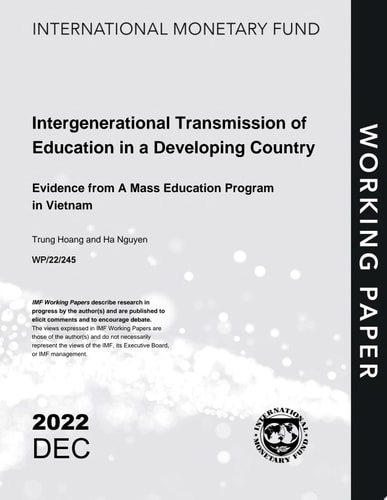
Intergenerational Transmission of Education in a Developing Country: Evidence from A Mass Education Program in Vietnam
0
0
As an Amazon Associate and affiliate partner, Menrva Books earns from qualifying purchases. Learn more
Author Description
We study the long-run and multi-generational effects of a mass education program in Vietnam during the First Indochina War (1946-1954). Difference-in-difference estimations indicate that the children of mothers exposed to the education program had an average of 0.9 more years of education. We argue that the impact is via mother’s education. An additional year of maternal education increases children’s education by up to 0.65 years, a stronger effect than those found in the existing literature. Better household lifestyles and a stronger focus on education are possible transmission pathways.
Menrva's Summary
THE THESIS
This study investigates the enduring, multi-generational impact of a mass education program implemented in Vietnam during a period of significant conflict. The research focuses on the period of the First Indochina War (1946-1954) and employs difference-in-difference estimations to quantify the program's long-term effects. The analysis specifically examines how maternal exposure to this education initiative influenced the educational attainment of their children, suggesting a strong intergenerational transmission of educational benefits.
THE SCOPE MAP
- Analysis of the long-run and multi-generational effects of a mass education program in Vietnam.
- Difference-in-difference estimations to assess the impact of maternal exposure to education.
- Quantification of the average increase in years of education for children of mothers exposed to the program.
- Examination of the role of maternal education as a primary transmission pathway.
- Exploration of household lifestyles and educational focus as potential transmission mechanisms.
THE AUTHORITY PERSPECTIVE
The study provides quantitative evidence on the significant intergenerational transmission of education, particularly highlighting the strong influence of maternal education. The findings suggest that improved household lifestyles and a greater emphasis on education within families are key pathways through which these benefits are passed down. The research contributes to the understanding of educational policy impacts in developing countries, especially in contexts marked by historical conflict and social upheaval.
Page Count:
36
Publication Date:
2022-12-09
Publisher:
International Monetary Fund
ISBN-13:
9798400226922
Economics
Non-Fiction
History
Sociology
Education
Community Tags
Similar Books