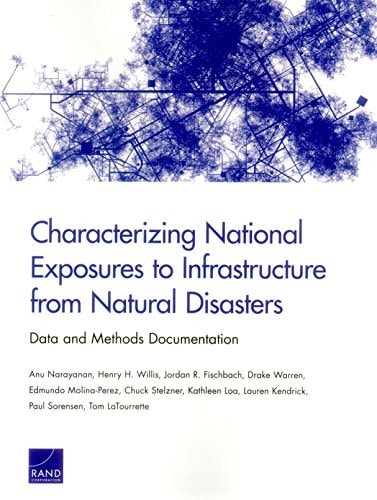
Characterizing National Exposures to Infrastructure from Natural Disasters: Data and Methods Documentation
0
0
As an Amazon Associate and affiliate partner, Menrva Books earns from qualifying purchases. Learn more
Author Description
The United States relies on a number of infrastructure systems--roads, the electric grid, ports, telecommunications networks, refineries, and the like--for carrying out basic social and economic functions. Disruptions of these systems could impose potentially significant economic, social, environmental and national security consequences. This report serves as the technical documentation and reference document for the data, methods, and analytic approach used in the analysis of national exposures to infrastructure from natural disasters. The analysis includes 11 natural hazards and five infrastructure sectors. Analytic findings about current and future exposures of infrastructure in the United States drawn from this data analysis are documented in a separate report. The report documents how each infrastructure type and hazard is represented in data sets to act as a reference for any use of the data. For each analyzed hazard, this report includes a brief background that describes potential infrastructure impacts, and relevant metrics; a list of sources used in compiling hazard data; an overview of existing methods and applications or modifications used to analyze regional exposure to varying levels of hazard severity. When analyzing infrastructure exposures with this data, it is important to understand this information to ensure that the analysis results reflect the scope, precision, and completeness of the data. Failure to appropriately use the data could result in analysis that misrepresents exposures. The report also provides an overview of all hazard and infrastructure data used to complete this analysis. Analytic findings about current and future exposures of infrastructure in the United States drawn from this data analysis are documented in a separate report
Menrva's Summary
THE THESIS
This report details the methodologies and data employed to assess the vulnerability of U.S. infrastructure to natural disasters. The United States depends on critical infrastructure systems, including transportation networks, the electric grid, and communication systems, for its social and economic stability. Disruptions to these systems can lead to severe economic, social, environmental, and national security repercussions. This document serves as a technical reference for the analytical approach used, covering 11 natural hazards and five infrastructure sectors, with findings presented in a separate report.
THE SCOPE MAP
- Detailed documentation of data and methods for analyzing national infrastructure exposures to natural disasters.
- Coverage of 11 distinct natural hazards and five key infrastructure sectors.
- Explanation of how each infrastructure type and hazard is represented in data sets.
- Background information on potential infrastructure impacts and relevant metrics for each analyzed hazard.
- Lists of sources used for compiling hazard data.
- Overview of existing methods, applications, and modifications for analyzing regional exposure to varying hazard severities.
- Guidance on the appropriate use of data to ensure accurate analysis of infrastructure exposures.
THE AUTHORITY PERSPECTIVE
This report is a technical documentation intended for users of the associated data analysis on national infrastructure exposures to natural disasters. It focuses on providing a clear reference for the data, methods, and analytic approach, emphasizing the importance of understanding these elements for accurate interpretation of findings. The document aims to ensure that analysis results reflect the scope, precision, and completeness of the data, thereby preventing misrepresentation of exposures. It serves as a foundational resource for understanding the complexities of assessing infrastructure vulnerability to a range of natural hazards.
Page Count:
72
Publication Date:
2016-01-01
Publisher:
Rand Corporation
ISBN-10:
0833094580
ISBN-13:
9780833094582
Science & Technology
Non-Fiction
Infrastructure
United States
Data Analysis
Community Tags
Similar Books













Reader Comments
Share Your Thoughts
No comments yet. Be the first to share your thoughts!