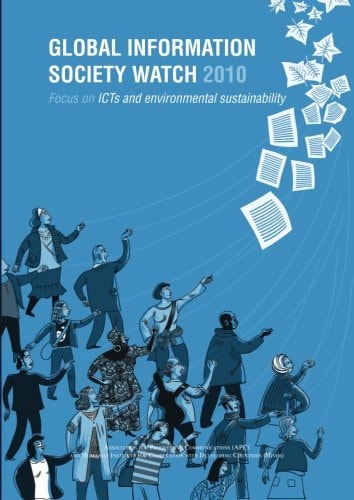
Global Information Society Watch 2010: ICTs and Environmental Sustainability
0
0
As an Amazon Associate and affiliate partner, Menrva Books earns from qualifying purchases. Learn more
Author Description
The worldwide Global Information Society Watch network looks at a different urgent issue each year and produces a critical report. In 2010 the adverse impacts of technology consumption and e-waste on the environment and the positive uses of technology to alleviate climate change were reported on from more than 50 countries. As information and communications technologies (ICTs) have become more widespread they have, certainly in more developed nations, become “invisible”; we don’t see them because we just accept they are there – often we only understand their significance to our lives when they break down. When only a few people had these gadgets they were novel, but as they became more common, and were eventually assimilated to become part of our modern culture, they became transparent; they’re just another part of our everyday life. The implicit association of these technologies with a “modern” lifestyle has in turn become a driver for their adoption in less developed states. To understand the sustainability of ICTs we must look at the life cycle of the devices themselves, from the sources of raw materials, through production, use, and finally disposal. The ever greater use of ICTs is taking place within a finite environmental system, and that system, like the human system in general, has limits. There are serious questions about how long we will be able to sustainably use today’s high-speed digital technologies before the “ecological limits” on production make them either too rare, or too costly, to justify their use as just another “invisible” element of our mass consumption culture.
Menrva's Summary
THE THESIS
This report investigates the environmental impact of information and communications technologies (ICTs) and explores their potential role in achieving environmental sustainability. The book examines the full lifecycle of ICT devices, from raw material sourcing and production to their use and disposal, highlighting the growing concerns around e-waste and the ecological limits of current consumption patterns. It presents critical analyses from over 50 countries, addressing both the adverse effects of technology consumption and the positive applications of technology in mitigating climate change. The report questions the long-term viability of high-speed digital technologies within a finite environmental system.
THE SCOPE MAP
- Analysis of the adverse impacts of technology consumption and e-waste on the environment.
- Exploration of the positive uses of technology to alleviate climate change.
- Reports from more than 50 countries on ICTs and environmental sustainability.
- Examination of the lifecycle of ICT devices: raw materials, production, use, and disposal.
- Discussion on the 'ecological limits' of production for digital technologies.
- Consideration of the 'invisible' nature of widespread ICTs in developed nations.
- Analysis of the drivers for ICT adoption in less developed states.
THE AUTHORITY PERSPECTIVE
The Global Information Society Watch 2010 report offers a critical examination of the environmental footprint of ICTs, drawing on a wide range of international perspectives. The collection of reports from over 50 countries provides a comprehensive global overview of the challenges and opportunities at the intersection of technology and environmental sustainability. The work is likely to be of interest to policymakers, researchers, and activists concerned with the ecological impact of the digital age. Its focus on the full lifecycle of technology and the concept of ecological limits positions it as a significant contribution to discussions on sustainable development.
Page Count:
248
Publication Date:
2010-01-01
ISBN-10:
9295049950
ISBN-13:
9789295049956
Science & Technology
Politics
Non-Fiction
Sustainability
Information Technology
Climate Change
E-waste
Community Tags
Similar Books