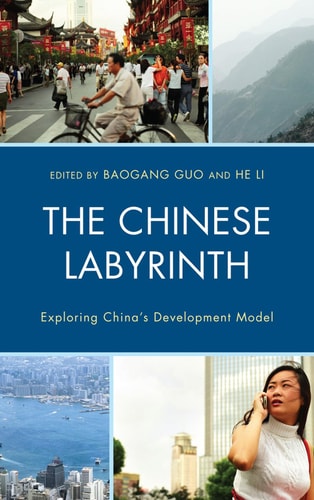
The Chinese Labyrinth: Exploring China's Model of Development
0
0
As an Amazon Associate and affiliate partner, Menrva Books earns from qualifying purchases. Learn more
Author Description
The on-going debate on China’s development model presents a fascinating yet very different image of Chinese exceptionalism, an idea that is similar to American exceptionalism. Is China exceptionalism a myth or reality? Will modern China, born of Confucian creeds, be culturally, economically and politically distinct from Western industrialized nations in an age of globalization? Does the Confucian culture make any qualitative difference in China’s developmental path and her international behavior in dealing with other nations? Will China be something of a paradox? Will this claim of distinction be a double-edged sword that will eventually hunt China in its future development? To decipher the complex Chinese labyrinth, this coedited book explores the development of a new social democracy, the Chinese vision of human rights and civil society, the asymmetry between economic and political development and the puzzle it presents, and the informal politics and Chinese innovation on governance and problem solving. We will also present a number of studies detailing innovations and systems that are distinctively Chinese, including innovations at local governances, the intriguing relationship between NGOs and the state, the grievance-addressing system (xinfang), and the co-existence of atheists and theists in China. As a multi-disciplinary research project, it attempts to shed some lights on these important questions.
Menrva's Summary
THE THESIS
This book investigates whether China's unique development model represents a genuine exceptionalism or a myth, questioning its distinctiveness from Western nations in the context of globalization. The authors explore whether Confucian culture fundamentally alters China's developmental path and international relations, posing whether this perceived distinction could become a hindrance. The work delves into the complexities of China's social democracy, its approach to human rights and civil society, the imbalance between economic and political progress, and innovative governance strategies.
THE SCOPE MAP
- Exploration of a new social democracy model in China.
- Analysis of the Chinese vision of human rights and civil society.
- Examination of the asymmetry between economic and political development.
- Studies on informal politics and Chinese innovation in governance.
- Details on innovations in local governance.
- The relationship between NGOs and the state.
- An examination of the grievance-addressing system (xinfang).
- Discussion on the co-existence of atheists and theists in China.
THE AUTHORITY PERSPECTIVE
This multi-disciplinary research project aims to shed light on critical questions surrounding China's development model. It examines the concept of Chinese exceptionalism in comparison to Western models and explores the influence of Confucian culture on its economic, political, and international trajectory. The book presents studies on distinctively Chinese innovations in governance, civil society, and social structures, offering a complex portrait of modern China's unique path.
Page Count:
230
Publication Date:
2011-12-16
Publisher:
Bloomsbury Academic
ISBN-10:
0739165755
ISBN-13:
9780739165751
Politics
Economics
Non-Fiction
Asian Studies
Globalization
Sociology
Community Tags
Similar Books