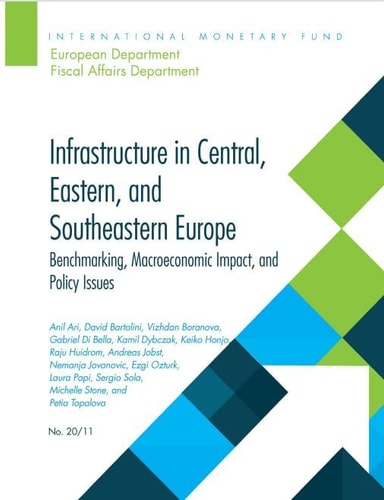
Infrastructure in Central, Eastern, and Southeastern Europe: Benchmarking, Macroeconomic Impact, and Policy Issues
0
0
As an Amazon Associate and affiliate partner, Menrva Books earns from qualifying purchases. Learn more
Author Description
CESEE countries lag in terms of infrastructure compared to the EU15, and deficient infrastructure is often cited as a constraint to growth and convergence. Investing in infrastructure is therefore an important long-standing policy issue for the region. In the context of the Covid-19 pandemic, infrastructure investment has also gained some ground as economies look to support activity in the recovery phase once the virus has been contained. Against this backdrop, this project seeks to benchmark infrastructure in CESEE, assess the macro impact of higher infrastructure investment, and discuss policies issues to maximize such impact. First, we benchmark infrastructure in the region versus the EU15, across various infrastructure sectors and using different methodologies. Second, deploying empirical estimates and model-based simulations, we analyze the macroeconomic impact of boosting infrastructure investment. Third, we present an in-depth analysis of policy issues: enhancing public investment management, managing fiscal risks, and mobilizing private sector participation.
Menrva's Summary
THE THESIS
Central, Eastern, and Southeastern European countries face significant infrastructure deficits compared to the EU15, hindering growth and convergence. This report benchmarks the region's infrastructure across various sectors, assesses the macroeconomic impact of increased investment, and explores policy measures to maximize this impact. The analysis considers the role of infrastructure investment in economic recovery post-Covid-19, examining public investment management, fiscal risks, and private sector participation to address these critical issues.
THE SCOPE MAP
- Benchmarking of infrastructure in Central, Eastern, and Southeastern Europe (CESEE) against the EU15.
- Analysis of the macroeconomic impact of increased infrastructure investment using empirical estimates and model-based simulations.
- In-depth discussion of policy issues related to infrastructure development.
- Examination of public investment management strategies.
- Assessment of fiscal risks associated with infrastructure projects.
- Exploration of methods for mobilizing private sector participation in infrastructure.
- Consideration of infrastructure investment as a recovery tool post-Covid-19.
THE AUTHORITY PERSPECTIVE
This report provides a comprehensive analysis of infrastructure challenges and opportunities in CESEE countries. The authors, drawing on their expertise in economics and policy, benchmark the region against the EU15 and quantify the macroeconomic benefits of increased investment. The work also delves into crucial policy considerations for enhancing public investment, managing fiscal risks, and attracting private capital. The analysis is particularly timely given the renewed focus on infrastructure as a driver of post-pandemic economic recovery.
Page Count:
123
Publication Date:
2020-09-28
Publisher:
International Monetary Fund
ISBN-10:
1513550551
ISBN-13:
9781513550558
Economics
Non-Fiction
Infrastructure
Policy
Community Tags
Similar Books