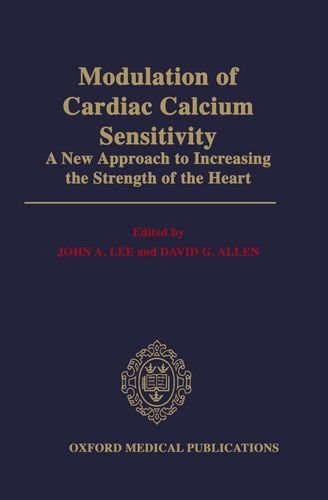
Modulation of Cardiac Calcium Sensitivity: A New Approach to Increasing the Strength of the Heart
0
0
As an Amazon Associate and affiliate partner, Menrva Books earns from qualifying purchases. Learn more
Author Description
Calcium sensitizers are a new class of drug which increases the force of contraction of the heart by increasing the calcium sensitivity of contractile proteins. Their development represents the first major innovation in the treatment of heart failure for over 200 years. Unlike other drugs in this area, they do not increase the intracellular calcium concentration and do not have the side effects associated with that mechanism of action. These drugs offer an alternative approach to the treatment of heart failure. The volume provides an authoritative overview of the physiology, biochemistry and clinical issues involved.
Menrva's Summary
THE THESIS
This volume investigates the physiological and biochemical mechanisms of calcium sensitizers as a novel therapeutic strategy for treating heart failure. The authors, David G. Allen and John A. Lee, synthesize current research to explain how these agents enhance cardiac contractility without the adverse effects linked to traditional calcium-elevating drugs. By examining the interaction between calcium and contractile proteins, the text establishes a framework for understanding this shift in clinical pharmacology.
THE SCOPE MAP
What You Will Find
- Physiological mechanisms of cardiac contraction
- Biochemical pathways of calcium sensitivity
- Clinical applications and therapeutic potential of calcium sensitizers
- Comparative analysis with traditional heart failure treatments
Scope Limits
- Does not provide exhaustive clinical trial data for every experimental compound
- Does not serve as a general textbook for all cardiovascular diseases
THE AUTHORITY PERSPECTIVE
Experts recognize this work as a foundational text for understanding the shift toward calcium sensitization in cardiac therapy. Readers frequently note the technical density of the prose, which is tailored for researchers and clinicians in the field of cardiovascular medicine.
Page Count:
368
Publication Date:
1993-04-29
Publisher:
Oxford University Press
ISBN-10:
0192623478
ISBN-13:
9780192623478
Pharmacology
Biochemistry
Medical
Heart Failure
Cardiology
Myocardium
Physiology
Calcium In The Body
Community Tags
Similar Books