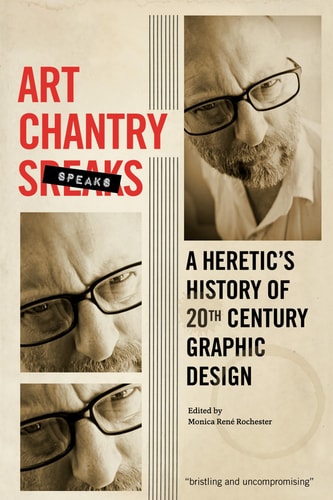
Art Chantry Speaks: A Heretic's History of 20th Century Graphic Design
0
0
As an Amazon Associate and affiliate partner, Menrva Books earns from qualifying purchases. Learn more
Author Description
There used to be a time when designers were trained in the history of composition. Now you just buy a f#$kin' piece of software and now you've become a designer. "Art Chantry... Is he a Luddite?" asks a Rhode Island School of Design poster promoting a Chantry lecture. "Or is he a graphic design hero?" For decades this avatar of low-tech design has fought against the cheap and easy use of digital software. Chantry's homage to expired technology, and his inspired use of Xerox machines and X-Acto blade cuts of printed material, created a much-copied style during the grunge period and beyond. Chantry's designs were published in Some People Can't Surf: The Graphic Design of Art Chantry (Chronicle Books), exhibited at the Seattle Art Museum, the Rock and Roll Hall of Fame, the Museum of Modern Art, the Smithsonian, and the Louvre. Chantry has drawn upon his extraordinary collection of twentieth-century graphic art to create compelling histories of the forgotten and unknown on essays he originally posted on his Facebook page. These essays might lionize the unrecognized illustrators of screws, wrenches, and pipes in equipment catalogs. Other posts might reveal how some famous artists were undeservedly recognized. Art Chantry Speaks is the kind of opinionated art history you've always wanted to read but were never assigned.
Menrva's Summary
THE THESIS
This book challenges conventional art history by championing overlooked figures and techniques in 20th-century graphic design. Art Chantry, known for his low-tech approach and distinctive style, draws from his extensive collection to present opinionated essays on the field. He critiques the rise of digital design, celebrates the unsung illustrators of industrial catalogs, and questions the recognition of certain famous artists, offering a counter-narrative to established art historical accounts.
THE SCOPE MAP
- Essays on the history of graphic design, focusing on overlooked or forgotten aspects.
- Analysis of 20th-century design trends and the impact of technology.
- Homages to low-tech design methods, including Xerox machines and X-Acto blade cuts.
- Critiques of contemporary design education and the role of digital software.
- Discussions on the recognition and misrecognition of artists and illustrators.
- Insights into the creation of a distinctive, widely-copied design style.
THE AUTHORITY PERSPECTIVE
The book is presented as an opinionated art history, drawing from essays originally posted on the author's Facebook page. The author's background as a designer known for his low-tech approach and distinctive style is highlighted, suggesting a critical and personal perspective. The content focuses on championing unrecognized illustrators and questioning established art historical narratives. The framing suggests a text that is both informative and provocative for those interested in graphic design history.
Page Count:
263
Publication Date:
2015-01-01
Publisher:
Feral House
ISBN-10:
1627310096
ISBN-13:
9781627310093
Non-Fiction
Art
Essays
Graphic Design
Design Theory
20th Century
Art History
Community Tags
Similar Books