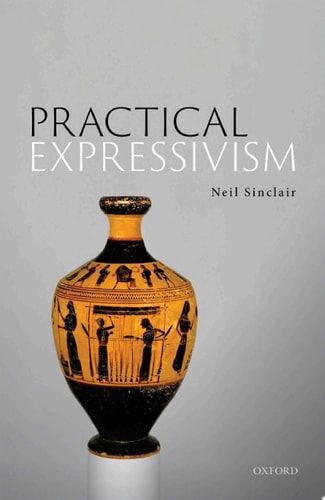
Practical Expressivism
0
0
As an Amazon Associate and affiliate partner, Menrva Books earns from qualifying purchases. Learn more
Author Description
What is morality? In Practical Expressivism, Neil Sinclair argues that morality is a purely natural interpersonal co-ordination device, whereby human beings express their attitudes in order to influence the attitudes and actions of others. The ultimate goal of these expressions is to find acceptable ways of living together. This 'expressivist' model for understanding morality faces well-known challenges concerning 'saving the appearances' of morality, because morality presents itself to us as a practice of objective discovery, not pure expression. This book demonstrates how a properly developed expressivist view can overcome this objection, by showing that even if moral practice is fundamentally expressive, it can still come to possess those features that make it appear objective (features such as talk and thought of moral disagreement, truth and belief, and the applicability of logical notions to moral sentences). The key to this development is to emphasise the unique and intricate practical role that morality plays in our lives. Practical expressivism is also practical in the further sense that it provides repeatable patterns that expressivists can deploy in coming to understand the apparently objective features of morality.
Menrva's Summary
THE THESIS
How can a moral framework based on the expression of attitudes account for the human perception of morality as an objective practice of discovery? Neil Sinclair, a philosopher specializing in metaethics, utilizes a naturalistic approach to argue that morality functions as an interpersonal coordination device. He posits that by focusing on the practical role morality plays in human social life, expressivists can explain the emergence of objective-seeming features such as truth, belief, and logical consistency.
THE SCOPE MAP
What You Will Find
- A defense of the expressivist model against the 'saving the appearances' objection.
- An analysis of how moral discourse functions to influence the attitudes and actions of others.
- A framework for understanding moral disagreement and belief within a non-cognitivist structure.
Scope Limits
- The text does not provide a comprehensive history of all metaethical theories.
- It does not offer a prescriptive guide for specific moral dilemmas but focuses on the metaethical structure of moral practice.
THE AUTHORITY PERSPECTIVE
Scholars in the field of metaethics recognize this work as a significant contribution to the development of expressivist theory. Readers frequently note the technical density of the prose, which is intended for an academic audience familiar with contemporary analytic philosophy.
Page Count:
313
Publication Date:
2021-01-01
Publisher:
OUP Oxford
ISBN-10:
0192635697
ISBN-13:
9780192635693
Philosophy
Expressivism
Moral Philosophy
Ethics
Metaethics
Community Tags
Similar Books