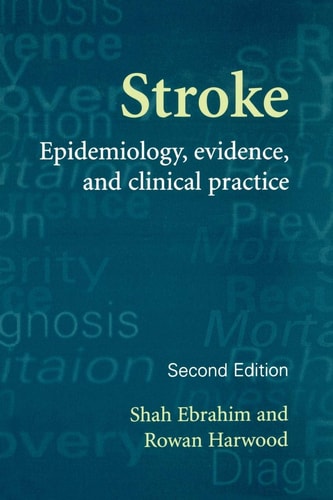
Stroke: Epidemiology, Evidence and Clinical Practice
0
0
As an Amazon Associate and affiliate partner, Menrva Books earns from qualifying purchases. Learn more
Author Description
Almost a decade has passed since the first edition of this book was published and the explosion of new research in stroke is very apparent. Several important themes have coloured medicine during this time: the development of evidence based health care, new optimism for acute drug treatments for stroke, the growth of new information about the human genome, a dramatic increase in the number of stroke clinicians and researchers world-wide, and the establishment of the Cochrane Collaboration. All of these trends are relevant in revising a book of this nature. Clinical epidemiology remains an essential foundation for the practice of evidence-based healthcare. The enthusiasm of the pharmaceutical industry has resulted in a large number of new trials, often too small to detect clinically important differences, and have increased the number of clinicians actively engaged in stroke research. It is even more important that these clinicians should have a good understanding of the design of trials, the rationale for randomisation and blinding, and the importance of selecting the most appropriate outcomes. Surprisingly, little of practical importance has resulted from the decade of exploration of the human genome - the best indication of a person's risk remains their phenotype and not their genotype. The impetus to organise stroke medicine into a defined speciality, with emphasis on acute stroke, is even stronger - but it is essential to bear in mind the importance of interdisciplinary working, the value of primary care, geriatric medicine, psychiatry and rehabilitation in the prevention, treatment rehabilitation and long-term care of stroke patients. The Cochrane Collaboration is currently grappling with a task of enormous size - the compression of tens of thousands of randomised control trials -and other scientific evidence- into systematic reviews of the effects of interventions. Citations to this work are made in the section on management. In this edition, there is an extra
Menrva's Summary
THE THESIS
This text investigates the integration of clinical epidemiology into the modern practice of stroke management and evidence-based healthcare. Dr. Rowan H. Harwood and Shah Ebrahim utilize their expertise in geriatric medicine and public health to synthesize a decade of research developments. The authors argue that despite rapid advancements in pharmaceutical trials and genomic study, the foundation of effective stroke care remains rooted in rigorous trial design, interdisciplinary collaboration, and a focus on patient outcomes.
THE SCOPE MAP
What You Will Find
- Analysis of randomized controlled trials and systematic reviews
- Methodologies for evaluating stroke interventions and clinical outcomes
- Frameworks for interdisciplinary stroke care including rehabilitation and primary care
Scope Limits
- Does not provide a comprehensive guide to genomic-based stroke prevention
- Excludes basic physiological descriptions of stroke pathology in favor of clinical management
THE AUTHORITY PERSPECTIVE
Experts recognize this work as a critical resource for clinicians navigating the transition toward evidence-based stroke medicine. Readers frequently note the text's emphasis on the necessity of critical appraisal skills for practitioners evaluating contemporary pharmaceutical trials.
Page Count:
343
Publication Date:
1999-10-15
Publisher:
Oxford University Press
ISBN-10:
019263075X
ISBN-13:
9780192630759
Neurology
Evidence Based Medicine
Medical
Healthcare
Community Tags
Similar Books