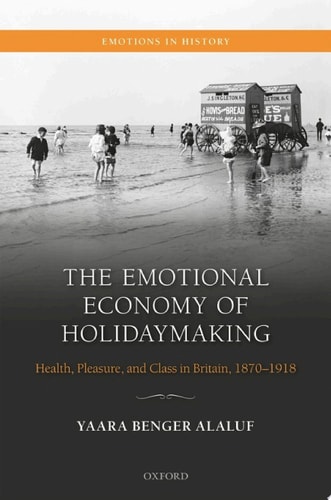
The Emotional Economy of Holidaymaking: Health, Pleasure, and Class in Britain, 1870-1918
0
0
As an Amazon Associate and affiliate partner, Menrva Books earns from qualifying purchases. Learn more
Author Description
It is often taken for granted that holiday resorts sell intangible commodities such as freedom, enjoyment, pleasure, and relaxation. But how did the desire for a 'happy holiday' emerge, how was 'the right to rest' legitimized, and how are emotions produced by commercial enterprises? To answer these questions, The Emotional Economy of Holidaymaking explores the rise of popular holidaymaking in late-nineteenth-century Britain, which is generally considered to be the birthplace of mass tourism. Drawing on a wide range of texts, including medical literature, parliamentary debates, advertisements, travel guides, popular stories, and personal accounts, the book unravels the role emotions played in British spa and seaside holiday cultures. Introducing the concept of an 'emotional economy', Yaara Benger Alaluf traces the overlapping impact that psychological and economic thought had on moral ideals and performative practices of work and leisure. Through a vivid account of changing attitudes toward health, pleasure, social class, and gender in late-Victorian and Edwardian Britain, she explains why the democratization of holidaymaking went hand in hand with its emotionalization. Combining the history of emotions with the sociology of commodification, the book offers an innovative approach to the study of the leisure and entertainment industries and a better understanding of how medicalized conceptions of emotions influenced people's dispositions, desires, consumption habits, and civil rights. Looking ahead to the central place of tourism in twenty-first century societies and its relation to stress and burnout, The Emotional Economy of Holidaymaking calls on future research of past and present leisure cultures to take emotions seriously and to rethink notions of rationality, authenticity, and agency.
Menrva's Summary
THE THESIS
How did the pursuit of leisure and the concept of a 'happy holiday' become commodified and legitimized within the social and economic framework of late-nineteenth-century Britain? Yaara Benger Alaluf, a scholar of historical emotions, investigates the intersection of psychological theory and economic practice during the rise of mass tourism. By analyzing the shift from Victorian work ethics to Edwardian leisure expectations, the author argues that the democratization of holidaymaking was fundamentally driven by the emotionalization of rest and health.
THE SCOPE MAP
What You Will Find
- Historical analysis of British spa and seaside culture from 1870 to 1918.
- The theoretical framework of an 'emotional economy' applied to leisure industries.
- Examination of medical literature, parliamentary records, and period advertisements.
Scope Limits
- The study focuses specifically on Britain and does not extend to comparative international tourism models.
- The research does not cover the post-1918 evolution of the tourism industry or modern digital-age leisure practices.
THE AUTHORITY PERSPECTIVE
Scholars in the field of cultural history recognize this work as a significant contribution to the intersection of emotional history and the sociology of consumption. Readers frequently note the academic density of the prose, which provides a rigorous examination of how medicalized concepts shaped social behavior and class dynamics.
Page Count:
208
Publication Date:
2021-01-01
Publisher:
OUP Oxford
ISBN-10:
0192635778
ISBN-13:
9780192635778
History
History of Emotions
Social History
British History
Tourism Studies
Modern History
Sociology
Cultural History
Community Tags
Other Editions(2)
Similar Books

Reader Comments
Share Your Thoughts
No comments yet. Be the first to share your thoughts!