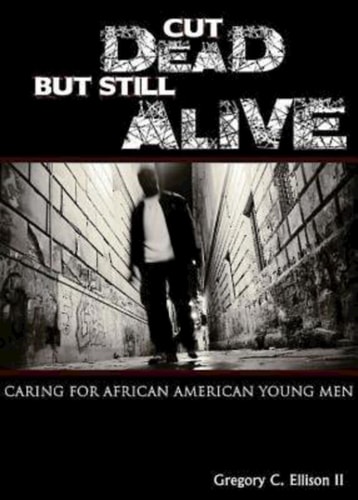
Cut Dead But Still Alive: Caring for African American Young Men
0
0
As an Amazon Associate and affiliate partner, Menrva Books earns from qualifying purchases. Learn more
Author Description
To cut dead means to refuse to acknowledge another with the intent to punish. Gregory Ellison says that this is the plight of African American young men. They are stigmatized with limited opportunity for education and disproportionate incarceration. At the same time, they are often resistant to help from social institutions including the church. They are mute and invisible to society but also in their inward being. Their voice and physical selves are not acknowledged, leaving them ripe for hopelessness and volatility. If the need is so great yet the desire for help wanes, where is the remedy? Healing can begin by reframing the problem. While cutting someone dead is destructive, it can also serve to prune and repot a disfigured being--giving new possibilities for life. In this provocative book, Ellison shows how caregivers can sow seeds of life, and nurture with guidance, admonition, training, and support in order to help create a community of reliable others serve as extended family.
Menrva's Summary
THE THESIS
This book investigates the societal neglect and internal struggles faced by African American young men, exploring the concept of being 'cut dead' as a metaphor for their stigmatization and marginalization. Gregory C. Ellison II. posits that this societal 'cutting dead' leads to limited educational opportunities, disproportionate incarceration, and a profound sense of invisibility and hopelessness. The book addresses the paradox of their resistance to help from institutions like the church, despite their deep-seated need. Ellison proposes a reframing of this problem, suggesting that the destructive act of 'cutting dead' can paradoxically serve as a pruning process, creating new possibilities for life and healing.
THE SCOPE MAP
- Analysis of the term 'cut dead' as applied to the experience of African American young men.
- Examination of societal stigmas including limited educational access and disproportionate incarceration rates.
- Exploration of the psychological impact of feeling mute and invisible.
- Discussion on the resistance of African American young men to institutional help.
- Proposal for reframing the problem of marginalization as a potential for growth.
- Strategies for caregivers to nurture and guide young men towards a sense of 'reliable others' and extended family.
- The role of guidance, admonition, training, and support in fostering positive development.
THE AUTHORITY PERSPECTIVE
The book is framed as a provocative examination of a critical social issue, suggesting that its reframing of 'cutting dead' offers a new perspective on caregiving for marginalized young men. The author's approach appears to be rooted in sociological and psychological analysis, aiming to provide practical strategies for intervention. The premise sets up a discussion on how societal actions, though destructive, can be reinterpreted to foster growth and community support. The work is positioned to challenge conventional understandings of social problems and offer a path toward healing and empowerment.
Page Count:
184
Publication Date:
2013-01-01
Publisher:
Abingdon Press
ISBN-10:
142670304X
ISBN-13:
9781426703041
Non-Fiction
Psychology
Social Issues
Sociology
Caregiving
Community Tags
Similar Books