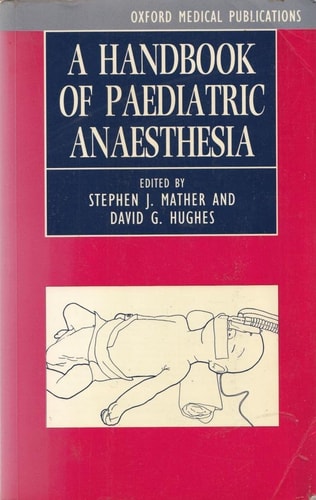
A Handbook of Paediatric Anaesthesia (Oxford Medical Publications)
0
0
As an Amazon Associate and affiliate partner, Menrva Books earns from qualifying purchases. Learn more
Author Description
This Handbook of Paediatric Anaesthesia aims to provide the guiding principles behind making clinical decisions in this specialty. It is a concise and readable introduction to neonatal and paediatric anaesthesia and is aimed at anaesthetists in training. The book will also act as an invaluable reference for those who only deal with children occasionally. It describes the anatomy and physiology of neonates and children, and then goes on to outline the pharmacology and action of anaesthetics and analgesics. Medical conditions which have a bearing on the use or effect of anaesthetics are discussed, and alternative methods of management are suggested. Anaesthesia for specialist surgery, for day-case surgery, and for radiological procedures is covered. The book also details transportation of the critically ill child, and administration of cardiopulmonary resuscitation. The Editors are both Consultant Anaesthetists at the Bristol Royal Hospital for Sick Children.
Menrva's Summary
THE THESIS
This text investigates the core clinical principles and decision-making frameworks required for the safe administration of anaesthesia to neonatal and paediatric patients. Edited by Consultant Anaesthetists David G. Hughes and Stephen J. Mather, the book synthesizes physiological data, pharmacological guidelines, and procedural protocols to assist anaesthetists in training and practitioners who encounter paediatric cases intermittently.
THE SCOPE MAP
What You Will Find
- Anatomical and physiological profiles of neonates and children
- Pharmacological data regarding anaesthetics and analgesics
- Management strategies for specialist, day-case, and radiological surgery
- Protocols for the transportation of critically ill children and cardiopulmonary resuscitation
Scope Limits
- Does not provide exhaustive coverage of rare or highly complex surgical sub-specialties
- Focuses primarily on clinical application rather than theoretical research or historical development
THE AUTHORITY PERSPECTIVE
Practitioners frequently identify this text as a reliable, concise reference for clinical practice in paediatric settings. Experts highlight the utility of the book for trainees and generalists who require clear, actionable guidance on paediatric anaesthesia protocols.
Page Count:
320
Publication Date:
1991-11-28
Publisher:
Oxford University Press
ISBN-10:
0192630113
ISBN-13:
9780192630117
Reference
Paediatrics
Medical
Community Tags
Similar Books