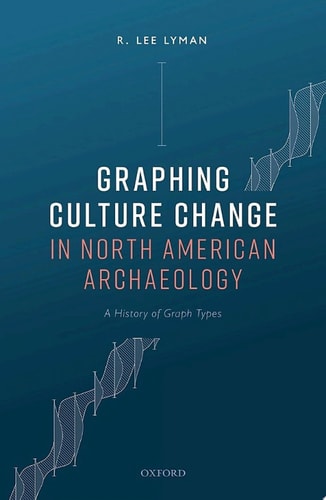
Graphing Culture Change in North American Archaeology: A History of Graph Types
0
0
As an Amazon Associate and affiliate partner, Menrva Books earns from qualifying purchases. Learn more
Author Description
Documentation, analysis, and explanation of culture change have long been goals of archaeology. Scientific graphs facilitate the visual thinking that allow archaeologists to determine the relationship between variables, and, if well designed, comprehend the processes implied by the relationship. Different graph types suggest different ontologies and theories of change, and particular techniques of parsing temporally continuous morphological variation of artefacts into types influence graph form. North American archaeologists have grappled with finding a graph that effectively and efficiently displays culture change over time. Line graphs, bar graphs, and numerous one-off graph types were used between 1910 and 1950, after which spindle graphs displaying temporal frequency distributions of specimens within each of multiple artefact types emerged as the most readily deciphered diagram. The variety of graph types used over the twentieth century indicate archaeologists often mixed elements of both Darwinian variational evolutionary change and Midas-touch like transformational change. Today, there is minimal discussion of graph theory or graph grammar in introductory archaeology textbooks or advanced texts, and elements of the two theories of evolution are still mixed. Culture has changed, and archaeology provides unique access to the totality of humankind's cultural past. It is therefore crucial that graph theory, construction, and decipherment are revived in archaeological discussion.
Menrva's Summary
THE THESIS
This work investigates how the evolution of graphical representation in North American archaeology reflects shifting theoretical frameworks regarding cultural change. R. Lee Lyman, a prominent scholar in archaeological method and theory, examines the historical trajectory of visual data presentation from 1910 to the present. By analyzing the transition from early line and bar graphs to the dominance of spindle diagrams, the author argues that these visual choices reveal an underlying, often unexamined, tension between Darwinian variational evolution and transformational theories of change.
THE SCOPE MAP
What You Will Find
- A historical survey of graphical techniques used in North American archaeology between 1910 and 1950.
- An analysis of how specific graph types, such as spindle graphs, influence the interpretation of artifact frequency distributions.
- A critique of the current lack of formal graph theory and grammar in modern archaeological pedagogy.
Scope Limits
- The text does not provide a comprehensive manual for modern digital data visualization software.
- It focuses primarily on North American archaeological literature rather than global archaeological traditions.
THE AUTHORITY PERSPECTIVE
Experts recognize this text as a specialized contribution to the history of archaeological methodology and visual communication. Readers frequently note the academic density of the prose, which serves as a foundational critique for researchers interested in the intersection of data theory and cultural evolution.
Page Count:
400
Publication Date:
2021-01-01
Publisher:
OUP Oxford
ISBN-10:
0192644556
ISBN-13:
9780192644558
Science History
Archaeology
Anthropology
Academic
Community Tags
Similar Books