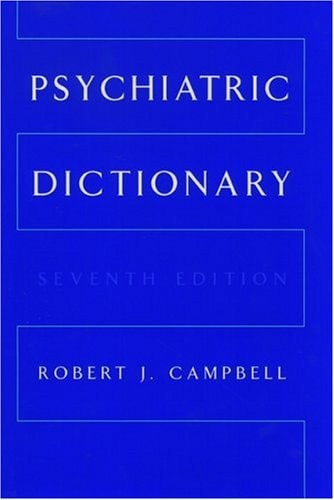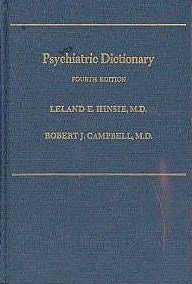
Psychiatric Dictionary (Oxford Medicine Publications)
0
0
As an Amazon Associate and affiliate partner, Menrva Books earns from qualifying purchases. Learn more
Author Description
Highly acclaimed as "by far the best and most complete dictionary devoted to the subject" (Psychiatric Quarterly on a previous edition), this seventh edition of Psychiatric Dictionary is the most extensive revision of the work to date. This edition includes the new terms and diagnostic criteria of the recently revised fourth edition of the Diagnostic and Statistical Manual of the American Psychiatric Association. In addition, it reflects the advances in neurobiology and neuroimaging that mark the "Decade of the Brain".During the past decade, outcome studies of different forms of psychotherapy lay the groundwork for the development of differential therapeutics. The new edition takes note of the growing emphasis on brief therapy even as it tries to capture the essence of recent developments in self-psychology and in the object relations school of psychoanalysis. More that 2200 entries of the seventh edition are new, constituting 18% of the total. Many of the entries from previous editions have been revised to include recent discoveries about the mechanism or disorder that they describe. Others have been eliminated or considerably reduced in size, and some have been retained only because of historical interest. As in previous editions, the more important terms are often given encyclopedic treatment. Cross-references are used to guide the reader to a core concept and also to suggest relationships or parallels between different models. In selecting terms for inclusion (and exclusion), and in deciding which terms merit a single sentence or two, the editor has tried to meet a goal of making the language of the field accessible not only to those who use it every day, but also to those who work primarily in other fields. In addition to the changes already noted, there are new or extensively revised entries in the following topical areas: use and misuse of alcohol and other substances; newer psychopharmacological agents and new uses of older drugs; psychology and social work;
Menrva's Summary
THE THESIS
This dictionary serves as a comprehensive reference tool designed to standardize and define the evolving terminology within the field of psychiatry. The authors, Leland E. Hinsie and Robert Jean Campbell, synthesize clinical, neurobiological, and psychoanalytic nomenclature to provide a bridge between specialized psychiatric practice and related medical or social work disciplines. By incorporating updated diagnostic criteria and research findings, the text functions as a foundational lexicon for practitioners and students navigating the complexities of mental health diagnostics and therapeutics.
THE SCOPE MAP
What You Will Find
- Definitions for over 2,200 new entries reflecting contemporary psychiatric advancements.
- Integration of diagnostic criteria from the Diagnostic and Statistical Manual of the American Psychiatric Association.
- Encyclopedic entries for core concepts with extensive cross-referencing to highlight interdisciplinary relationships.
- Coverage of neurobiology, neuroimaging, psychopharmacology, and various schools of psychoanalysis.
Scope Limits
- The text focuses primarily on clinical and historical psychiatric terminology and does not provide exhaustive treatment of non-psychiatric medical fields.
- It excludes outdated terminology unless deemed of specific historical interest to the field.
THE AUTHORITY PERSPECTIVE
Critics and professionals have historically identified this work as a definitive resource for its breadth and completeness in the psychiatric domain. Readers frequently note the academic density of the prose, which is structured to support both daily clinical application and interdisciplinary research.
Page Count:
828
Publication Date:
1970-01-01
Publisher:
Oxford University Press
ISBN-10:
0192644157
ISBN-13:
9780192644152
Psychology
Reference
Medicine
Mental Health
Dictionaries
Psychiatry
Community Tags
Similar Books