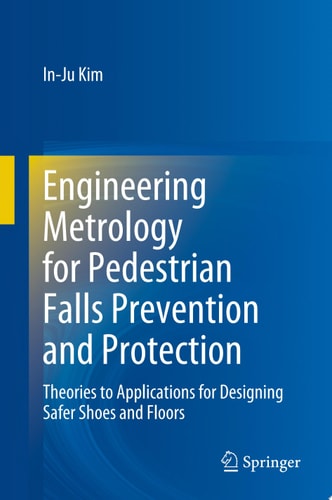
Engineering Metrology for Pedestrian Falls Prevention and Protection
0
0
As an Amazon Associate and affiliate partner, Menrva Books earns from qualifying purchases. Learn more
Author Description
This book explains how to improve the validity, reliability, and repeatability of slip resistance assessments amongst a range of shoes, floors, and environments from an engineering metrology viewpoint—covering theoretical and experimental aspects of slip resistance mechanics and mechanisms. Pedestrian falls resulting from slips or falls are one of the foremost causes of fatal and non-fatal injuries that limit people’s functionality. There have been prolonged efforts globally to identify and understand their main causes and reduce their frequency and severity. This book deals with large volumes of information on tribological characteristics such as friction and wear behaviours of the shoes and floors and their interactive impacts on slip resistance performances. Readers are introduced to theoretical concepts and models and collected evidence on slip resistance properties amongst a range of shoe and floor types and materials under various ambulatory settings. These approaches can be used to develop secure design strategies against fall incidents and provide a great step forward to build safer shoes, floors, and walking/working environments for industries and communities around the world. The book includes many case studies.
Menrva's Summary
THE THESIS
This book investigates the engineering metrology principles essential for preventing and mitigating pedestrian falls caused by slips. It addresses the critical need for valid, reliable, and repeatable slip resistance assessments across diverse footwear, flooring, and environmental conditions. The work delves into the theoretical and experimental mechanics of slip resistance, analyzing tribological characteristics like friction and wear between shoes and floors. By presenting theoretical concepts, models, and empirical evidence, the book aims to inform the development of secure design strategies for safer shoes, floors, and environments.
THE SCOPE MAP
- Theoretical and experimental aspects of slip resistance mechanics and mechanisms.
- Analysis of tribological characteristics (friction and wear) of shoes and floors.
- Models and collected evidence on slip resistance properties under various ambulatory settings.
- Case studies demonstrating practical applications of fall prevention strategies.
- Methodologies for improving the validity, reliability, and repeatability of slip resistance assessments.
- Insights into developing secure design strategies for safer walking and working environments.
THE AUTHORITY PERSPECTIVE
The book is positioned as a comprehensive resource for understanding and improving pedestrian fall prevention through engineering metrology. Its focus on the scientific and engineering aspects of slip resistance suggests it will appeal to researchers, safety engineers, and product designers in relevant industries. The inclusion of theoretical concepts, experimental data, and case studies indicates a thorough approach to the subject matter, aiming to provide actionable insights for creating safer environments.
Page Count:
520
Publication Date:
2022-03-25
Publisher:
Springer Nature
ISBN-10:
3030957462
ISBN-13:
9783030957469
Non-Fiction
Science
Engineering
Research
Biomechanics
Safety
Community Tags
Similar Books