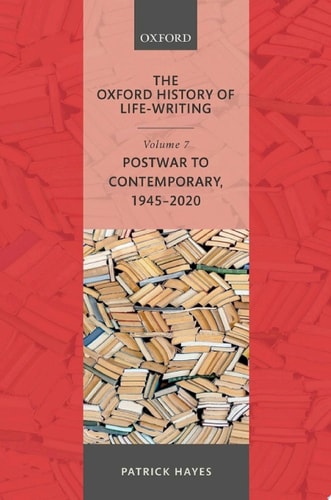
The Oxford History of Life-Writing: Volume 7: Postwar to Contemporary, 1945-2020
0
0
As an Amazon Associate and affiliate partner, Menrva Books earns from qualifying purchases. Learn more
Author Description
With the growing urgency of questions about how to claim identity and achieve authenticity, life-writing started to acquire an unprecedented cultural importance. A range of social and economic developments, from the publishing boom in memoir writing to the rise of the internet, transformed the possibilities for self-expression. By the end of the timespan covered in this book life-writing was no longer something done mainly by important individuals who wrote their autobiography, or by sensitive souls who kept a diary. It became a truly ubiquitous phenomenon, part and parcel of the everyday formation of selfhood. Considering a diverse range of texts from across the English-speaking world, this volume places life-writing in relation to wider debates about the sociology and philosophy of modern identity, and the changing marketplace of publishing and bookselling. Yet in doing so it seeks above all to credit the extraordinary literary inventiveness which the pursuit of self-knowledge inspired in this period. Major subjects addressed include: the aftermath of World War II, including responses to the Holocaust; the impact of psychoanalysis on biography; autofiction, autrebiography, and changing ideas about authentic self-knowledge; coming out memoirs and the transformation of sexual identity; feminist exemplary writing and lyric poetry; multilingualism and intercultural life-writing; the memoir boom and the decline of intimacy; testimony narrative and memory culture; posthumanism in theory and practice; literary biography as an alternative to literary theory; literary celebrity and its consequences for literature; social media and digital life-writing.
Menrva's Summary
THE THESIS
This volume investigates how life-writing evolved from a niche practice of the elite into a ubiquitous cultural phenomenon that defines modern identity formation between 1945 and 2020. Patrick Hayes, a scholar of modern literature, synthesizes historical, sociological, and philosophical perspectives to examine the transformation of self-expression. He argues that the shift in life-writing reflects broader changes in the publishing industry, the rise of digital media, and evolving concepts of the authentic self.
THE SCOPE MAP
What You Will Find
- Analysis of the memoir boom and the rise of digital self-expression.
- Examination of autofiction, testimony narratives, and posthumanist theory.
- Discussions on the impact of psychoanalysis, feminism, and sexual identity on biographical writing.
Scope Limits
- The text focuses primarily on the English-speaking world and does not provide an exhaustive global survey of all languages.
- It prioritizes literary and cultural analysis over a comprehensive chronological catalog of every published autobiography.
THE AUTHORITY PERSPECTIVE
Scholars and critics recognize this volume as a comprehensive reference for understanding the intersection of literature and identity in the late twentieth and early twenty-first centuries. Readers frequently note the academic density of the prose, which provides a rigorous framework for students and researchers in the humanities.
Page Count:
469
Publication Date:
2022-01-01
Publisher:
OUP Oxford
ISBN-10:
019266896X
ISBN-13:
9780192668967
History
Biography
Non-Fiction
New Used & Rental Textbooks
Indigenous
Literary Criticism
Community Tags
Similar Books