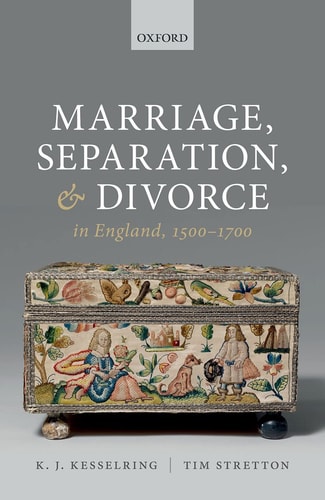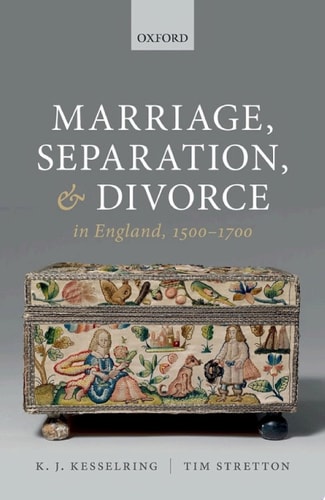
Marriage, Separation, and Divorce in England, 1500-1700
0
0
As an Amazon Associate and affiliate partner, Menrva Books earns from qualifying purchases. Learn more
Author Description
England is well known as the only Protestant state not to introduce divorce in the sixteenth-century Reformation. Only at the end of the seventeenth century did divorce by private act of parliament become available for a select few men and only in 1857 did the Divorce Act and its creation of judicial divorces extend the possibility more broadly. Aspects of the history of divorce are well known from studies which typically privilege the records of the church courts that claimed a monopoly on marriage. But why did England alone of all Protestant jurisdictions not allow divorce with remarriage in the era of the Reformation, and how did people in failed marriages cope with this absence? One part of the answer to the first question, Kesselring and Stretton argue, and a factor that shaped people's responses to the second, lay in another distinctive aspect of English law: its common-law formulation of coverture, the umbrella term for married women's legal status and property rights. The bonds of marriage stayed tightly tied in post-Reformation England in part because marriage was as much about wealth as it was about salvation or sexuality, and English society had deeply invested in a system that subordinated a wife's identity and property to those of the man she married. To understand this dimension of divorce's history, this study looks beyond the church courts to the records of other judicial bodies, the secular courts of common law and equity, to bring fresh perspective to a history that remains relevant today.
Menrva's Summary
THE THESIS
This study investigates why England remained the only Protestant state to resist the introduction of divorce during the Reformation, examining the intersection of legal frameworks and social practices. Authors K. J. Kesselring and Tim Stretton argue that the persistence of the common-law doctrine of coverture—which subsumed a wife's legal identity and property rights under her husband's—functioned as a primary barrier to divorce. By analyzing records from secular courts of common law and equity alongside traditional church court documents, the authors demonstrate how the economic imperatives of marriage in early modern England reinforced the indissolubility of the marital bond.
THE SCOPE MAP
What You Will Find
- Analysis of the legal doctrine of coverture and its impact on marital stability.
- Examination of secular court records, including common law and equity proceedings.
- Historical context regarding the English Reformation and its divergence from continental Protestant divorce practices.
Scope Limits
- The study does not focus on the post-1857 period following the Divorce Act.
- The research does not prioritize ecclesiastical court records over secular legal evidence.
THE AUTHORITY PERSPECTIVE
Scholars recognize this work as a significant contribution to the legal and social history of early modern England, particularly for its integration of property law into the study of marriage. Experts highlight the authors' ability to synthesize complex judicial records into a coherent argument regarding the structural barriers to divorce in the pre-modern era.
Page Count:
360
Publication Date:
2022-01-01
Publisher:
OUP Oxford
ISBN-10:
0192666959
ISBN-13:
9780192666956
History
Gender Studies
Legal History
Early Modern
Social History
World Civilization
Marriage law