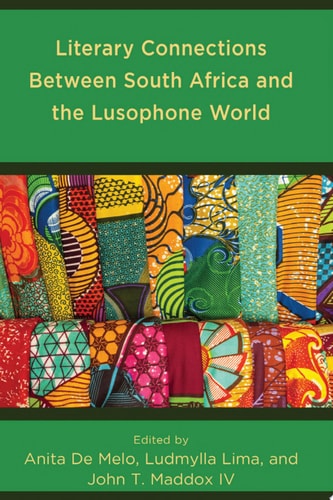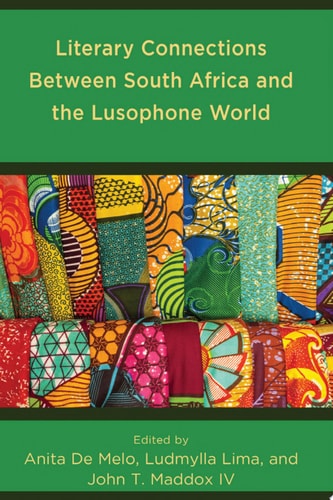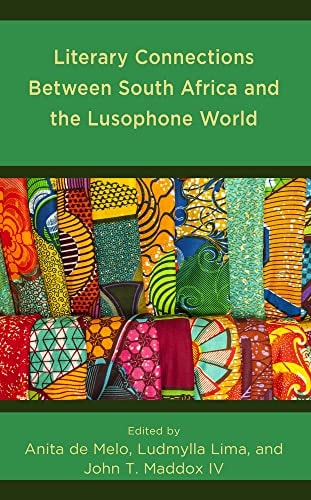
Literary Connections Between South Africa and the Lusophone World
0
0
As an Amazon Associate and affiliate partner, Menrva Books earns from qualifying purchases. Learn more
Author Description
Literary Connections between South Africa and the Lusophone World connects literatures and cultures of South Africa and the Portuguese-speaking nations of Africa and beyond, and is set within literary and cultural studies. The chapters gathered in this volume reinforce the critical and ongoing conversations in comparative and world literature from perspectives of the South. It outlines some possible theoretical and methodological starting points for a comparative framework that targets, transnationally, literatures from the South. This volume is an additional step to renew the critical potentialities of comparative literary studies (Spivak 2009) as well as of humanistic criticism itself (Said 2004) as South Africa and the Lusophone world (except its former colonizer, Portugal) are outside the spatial and cultural dimension usually defined as European and/or North American. In this sense and due to the evident geographical and socio-historical links between these regions, critical scholarship on their literary connections can contribute to unprecedented perspectives of representational practices within a broader contextual dimension, and in so doing, provides the emergence of what Boaventura de Sousa Santos called “epistemologies of the South” (Santos 2016), as it considers cultural exchanges in the space of so-called “overlapping territories” and “intertwined histories” (Said 1993).
Menrva's Summary
THE THESIS
This volume investigates the intricate literary and cultural connections between South Africa and the Lusophone world. It aims to foster critical conversations in comparative and world literature from Southern perspectives, proposing theoretical and methodological frameworks for transnational studies of literature from the Global South. By examining these regions, often situated outside traditional European and North American literary canons, the book seeks to offer unprecedented insights into representational practices and contribute to the emergence of "epistemologies of the South."
THE SCOPE MAP
- Analysis of literary and cultural exchanges between South Africa and Portuguese-speaking African nations.
- Exploration of comparative and world literature from perspectives of the Global South.
- Theoretical and methodological starting points for transnational literary comparison.
- Contribution to the renewal of comparative literary studies and humanistic criticism.
- Consideration of cultural exchanges within "overlapping territories" and "intertwined histories."
- Engagement with concepts such as "epistemologies of the South."
THE AUTHORITY PERSPECTIVE
The book is positioned as a significant contribution to comparative literary studies, particularly from Southern perspectives. It is framed as a renewal of critical approaches within the humanities, drawing on established scholars like Spivak and Said to support its theoretical underpinnings. The volume's focus on regions outside the traditional Western canon aims to foster new insights into representational practices and cultural exchanges.
Page Count:
158
Publication Date:
2022-10-12
Publisher:
Bloomsbury Academic
ISBN-10:
1666916420
ISBN-13:
9781666916423
Literary Fiction
Non-Fiction
Comparative
African
Community Tags
Similar Books