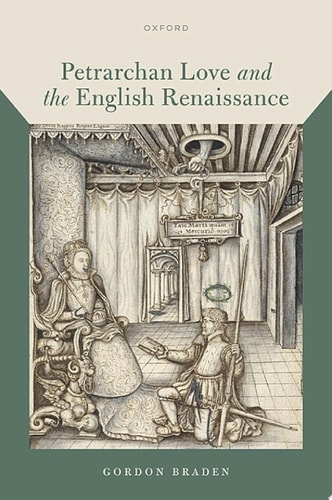
Petrarchan Love and the English Renaissance
0
0
As an Amazon Associate and affiliate partner, Menrva Books earns from qualifying purchases. Learn more
Author Description
This book surveys English love poetry, primarily, though not exclusively, sonnets and sonnet sequences that show the influence of Petrarch, from the early sixteenth century to the publication of Mary Wroth's Pamphilia to Amphilanthus in 1621. It incorporates a range of new scholarship and thinking into narrative history, with a focus on particular poets including Thomas Wyatt, George Gascoigne, Philip Sidney, Fulke Greville, Samuel Daniel, Wroth, Walter Ralegh, and Shakespeare, as well as particularly notable poems such as "They flee from me", "Gascoigne's Woodmanship", and "The Ocean's Love to Cynthia".The self-absorption of Petrarchan lyricism is brought into a more populous environment and is linked to the ambitious and intense world of the English court, within which many of these poets lived and worked. During the reign of Queen Elizabeth, the Petrarchan theme of love for a powerful but distant woman was literalized in the politics of the realm, in ways that the queen herself recognized and exploited. A final chapter offers a new model for the implied narrative of Shakespeare's sonnets.
Menrva's Summary
THE THESIS
This book investigates the evolution of Petrarchan lyricism within the English Renaissance, specifically examining how the conventions of love poetry intersected with the political realities of the Elizabethan court. Gordon Braden, a scholar of Renaissance literature, synthesizes historical context with close readings of major poets to argue that the self-absorbed nature of Petrarchan verse was transformed by the social and political pressures of the English court. By analyzing the works of figures such as Wyatt, Sidney, and Shakespeare, the author demonstrates how the trope of the distant, powerful beloved mirrored the actual power dynamics surrounding Queen Elizabeth I.
THE SCOPE MAP
What You Will Find
- A survey of English sonnets and sonnet sequences from the early sixteenth century to 1621.
- Analysis of specific poets including Thomas Wyatt, Philip Sidney, and Mary Wroth.
- A proposed model for the implied narrative structure within Shakespeare's sonnets.
- Examination of the intersection between courtly politics and poetic themes.
Scope Limits
- The study focuses primarily on English poetry and does not provide an exhaustive history of Petrarchism in other European traditions.
- The analysis concludes with the publication of Mary Wroth's work in 1621, excluding later developments in the seventeenth century.
THE AUTHORITY PERSPECTIVE
Scholars and students of Renaissance literature frequently cite this text for its clear integration of historical context with formal poetic analysis. It is regarded as a valuable resource for understanding the political utility of Petrarchan conventions in the Elizabethan era.
Page Count:
321
Publication Date:
2022-01-01
Publisher:
OUP Oxford
ISBN-10:
0192674145
ISBN-13:
9780192674142
Poetry
History
Theatre
Humanities
Academic
English literature
Special Topics
Literary Criticism
Community Tags
Similar Books