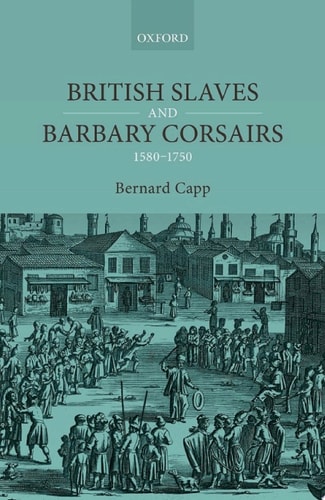
British Slaves and Barbary Corsairs, 1580-1750
0
0
As an Amazon Associate and affiliate partner, Menrva Books earns from qualifying purchases. Learn more
Author Description
British Slaves and Barbary Corsairs is the first comprehensive study of the thousands of Britons captured and enslaved in North Africa in the early modern period, an issue of intense contemporary concern but almost wholly overlooked in modern histories of Britain. The study charts the course of victims' lives from capture to eventual liberation, death in Barbary, or, for a lucky few, escape. After sketching the outlines of Barbary's government and society, and the world of the corsairs, it describes the trauma of the slave-market, the lives of galley-slaves and labourers, and the fate of female captives. Most captives clung on to their Christian faith, but a significant minority apostatized and accepted Islam. For them, and for Britons who joined the corsairs voluntarily, identity became fluid and multi-layered. Bernard Capp also explores in depth how ransoms were raised by private and public initiatives, and how redemptions were organised by merchants, consuls, and other intermediaries. With most families too poor to raise any ransom, the state came under intense pressure to intervene. From the mid-seventeenth century, the navy played a significant role in 'gunboat diplomacy' that eventually helped end the corsair threat. The Barbary corsairs posed a challenge to most European powers, and the study places the British story within the wider context of Mediterranean slavery, which saw Moors and Christians as both captors and captives.
Menrva's Summary
THE THESIS
This work investigates the historical reality and societal impact of thousands of British subjects captured and enslaved by North African corsairs between 1580 and 1750. Bernard Capp, a distinguished historian of early modern Britain, utilizes a wide array of archival records, including consular reports, ransom accounts, and personal narratives, to reconstruct the experiences of these captives. He argues that this phenomenon was a significant yet neglected aspect of British foreign policy and social history, illustrating the complex interplay between Mediterranean power dynamics and individual identity.
THE SCOPE MAP
What You Will Find
- Detailed analysis of the Barbary corsair government and maritime raiding practices.
- Examination of the logistical and financial mechanisms used to raise ransoms for enslaved Britons.
- Case studies regarding the conversion of captives to Islam and the fluidity of identity in North Africa.
- Evaluation of the role of the British Royal Navy in early gunboat diplomacy.
Scope Limits
- The study focuses primarily on the British experience and does not provide an exhaustive history of all European nations involved in Mediterranean slavery.
- It does not offer a comprehensive biography of every individual captive, but rather synthesizes broader trends from available records.
THE AUTHORITY PERSPECTIVE
Historians and scholars of the early modern period recognize this work as a foundational text for understanding the intersection of maritime conflict and human trafficking in the Mediterranean. Readers frequently note the academic density of the prose and the meticulous archival research that supports the author's conclusions.
Page Count:
208
Publication Date:
2022-01-01
Publisher:
OUP Oxford
ISBN-10:
0192671804
ISBN-13:
9780192671806
History
History - Modern
World Civilization
Maritime history
British History
Slavery
Mediterranean History
Community Tags
Similar Books